
Artificial Intelligence in Medicine: Revolutionising Healthcare
Artificial Intelligence (AI) is transforming numerous industries, and medicine is no exception. With its ability to analyse vast amounts of data quickly and accurately, AI is poised to revolutionise healthcare by improving diagnostics, personalising treatment plans, and enhancing patient care.
Enhancing Diagnostics
One of the most promising applications of AI in medicine is in the field of diagnostics. AI algorithms can process medical images such as X-rays, MRIs, and CT scans with remarkable precision. These systems can detect anomalies that may be overlooked by human eyes, leading to earlier and more accurate diagnoses.
For instance, AI systems are being used to identify early signs of diseases such as cancer or diabetic retinopathy. By recognising patterns that indicate the presence of these conditions, AI can assist healthcare professionals in making faster decisions about patient care.
Personalised Treatment Plans
AI is also enabling the development of personalised treatment plans tailored to individual patients. By analysing a patient’s genetic information, medical history, and lifestyle factors, AI can recommend treatments that are more likely to be effective for that specific individual.
This approach not only increases the likelihood of successful outcomes but also minimises potential side effects by avoiding one-size-fits-all treatments. Personalised medicine represents a significant leap forward in providing targeted therapies that meet each patient’s unique needs.
Streamlining Administrative Tasks
Apart from direct patient care, AI is streamlining administrative tasks within healthcare settings. Automated systems can handle scheduling appointments, managing patient records, and processing billing information efficiently. This reduces the administrative burden on healthcare professionals, allowing them to focus more on patient care.
Improving Patient Monitoring
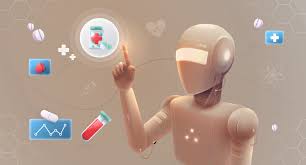
AI-powered wearable devices are becoming increasingly popular for monitoring patients’ health in real-time. These devices collect data on vital signs such as heart rate and blood pressure and use AI algorithms to detect any irregularities or potential health issues.
This continuous monitoring allows for timely interventions if necessary and provides valuable data for ongoing research into chronic conditions like diabetes or heart disease.
The Future of AI in Medicine
The future of artificial intelligence in medicine looks promising as technology continues to advance rapidly. However, it is essential to address ethical concerns related to data privacy and ensure these technologies are used responsibly.
Collaboration between technologists and medical professionals will be crucial in harnessing the full potential of AI while maintaining high standards of patient safety and care quality.
In conclusion, artificial intelligence has already started making significant contributions towards improving healthcare outcomes worldwide. As we continue exploring new possibilities offered by this technology-driven revolution within medicine itself – there’s no doubt about its transformative power!
Exploring Artificial Intelligence in Medicine: Key Questions and Insights
- What is an example of artificial intelligence in medicine?
- When was AI first used in medicine?
- Who introduced AI in medicine?
- What are some examples of AI in medicine?
- How is artificial intelligence being used in medicine?
- What is an example of an AI drug?
- Could AI ever replace doctors?
What is an example of artificial intelligence in medicine?
An example of artificial intelligence in medicine is software that analyses medical images, such as mammograms or chest X-rays, to highlight patterns that may indicate disease. It can help clinicians spot potential problems and prioritise cases for review, but it supports rather than replaces a qualified healthcare professional, who makes the diagnosis in context.
When was AI first used in medicine?
Artificial intelligence first made its foray into the field of medicine in the early 1970s. One of the pioneering systems was MYCIN, developed at Stanford University, which was designed to diagnose bacterial infections and recommend antibiotics. Although MYCIN was never used in clinical practice due to various limitations, it laid the groundwork for future AI applications in medicine. This early exploration demonstrated the potential of AI to assist in medical decision-making and inspired subsequent research and development efforts that have led to the sophisticated AI systems used in healthcare today.
Who introduced AI in medicine?
The introduction of artificial intelligence in medicine can be traced back to the early 1970s, with one of the pioneering efforts being the development of MYCIN, an AI program designed to diagnose bacterial infections and recommend antibiotics. This project was led by Edward Shortliffe at Stanford University and was among the first expert systems in the field of medicine. MYCIN utilised a rule-based approach to simulate human expertise in diagnosing infectious diseases, marking a significant step forward in applying AI technologies to healthcare. Since then, numerous researchers and institutions have contributed to advancing AI in medicine, building on these foundational efforts to develop more sophisticated and diverse applications.
What are some examples of AI in medicine?
Artificial intelligence is making significant strides in the field of medicine, with numerous practical applications already in use. One prominent example is the utilisation of AI algorithms in medical imaging, where they assist radiologists by analysing X-rays, MRIs, and CT scans to detect abnormalities such as tumours or fractures with remarkable accuracy. AI is also employed in predictive analytics to forecast patient outcomes and disease progression by analysing vast datasets. In personalised medicine, AI helps tailor treatment plans based on a patient’s genetic profile and medical history, enhancing the effectiveness of therapies. Additionally, AI-powered chatbots and virtual health assistants are being used to provide patients with immediate medical advice and support, improving access to healthcare services. These examples illustrate how AI is enhancing diagnostic accuracy, personalising treatments, and streamlining healthcare delivery processes.
How is artificial intelligence being used in medicine?
Artificial intelligence is being used in medicine to help clinicians analyse medical images, identify patterns in test results and health records, and support decisions about diagnosis and treatment. It can also assist with tasks such as monitoring patients, predicting health risks, accelerating medical research and reducing administrative workloads. These tools are intended to support—not replace—healthcare professionals, who remain responsible for interpreting results and making decisions with patients. Their use requires careful oversight to protect privacy, check for bias and ensure that outputs are safe and reliable.
What is an example of an AI drug?
An example of an AI-developed drug is the medication DSP-1181, which was created using artificial intelligence algorithms. DSP-1181 was developed through a collaboration between the British AI company Exscientia and the Japanese pharmaceutical firm Sumitomo Dainippon Pharma. The drug targets obsessive-compulsive disorder (OCD) and was notable for its rapid development process, which took less than 12 months from initial design to clinical trials—a significant reduction compared to traditional methods. This achievement demonstrates how AI can accelerate drug discovery by efficiently analysing vast datasets and predicting how different compounds will interact with biological targets.
Could AI ever replace doctors?
The question of whether AI could ever replace doctors is a topic of considerable debate and intrigue within the medical community. While AI technologies have made significant strides in enhancing diagnostic accuracy, streamlining administrative tasks, and personalising treatment plans, they are not poised to replace the nuanced judgement and empathetic care provided by human doctors. The strength of AI lies in its ability to process vast amounts of data quickly and identify patterns that may not be immediately apparent to human observers. However, medicine is as much an art as it is a science, requiring emotional intelligence, ethical decision-making, and the ability to understand patients’ unique circumstances—qualities that AI currently lacks. Instead of replacing doctors, AI is more likely to serve as a powerful tool that complements their expertise, enabling them to deliver higher quality care more efficiently while focusing on the human aspects of patient interaction.