
Learning in AI: Transforming the Future
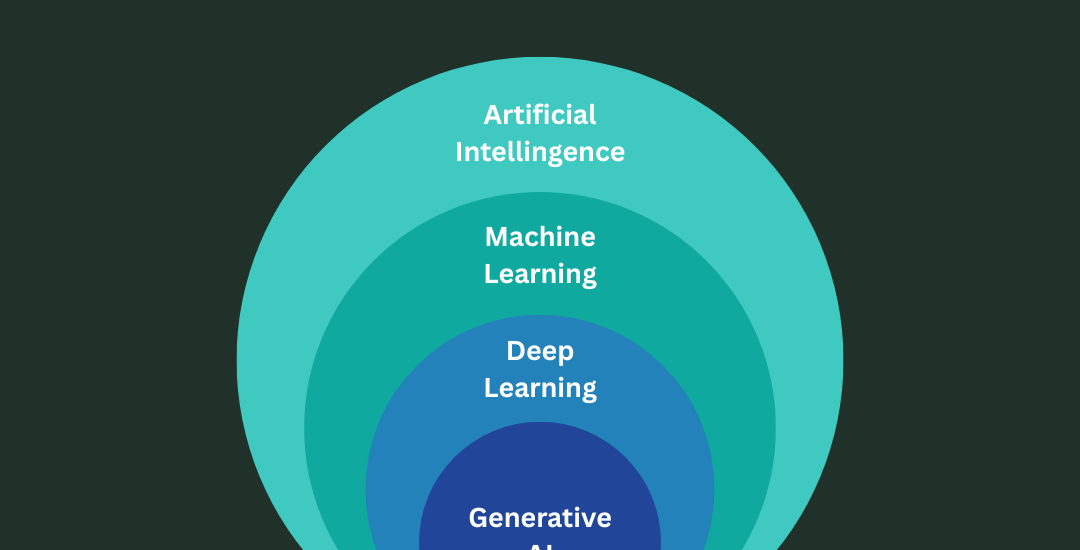
The field of artificial intelligence (AI) is rapidly evolving, with learning algorithms at its core. These algorithms enable machines to improve their performance over time without explicit programming. The concept of learning in AI is pivotal to developing intelligent systems capable of adapting to new data and environments.
Types of Learning in AI
There are several types of learning methodologies employed in AI, each with unique characteristics and applications:
- Supervised Learning: This involves training a model on a labelled dataset, where the input-output pairs are known. The model learns to map inputs to outputs and can be used for tasks such as classification and regression.
- Unsupervised Learning: Unlike supervised learning, unsupervised learning deals with unlabelled data. The model tries to identify patterns or groupings within the data. Clustering and dimensionality reduction are common applications.
- Semi-supervised Learning: This approach combines both labelled and unlabelled data during training, often resulting in improved accuracy compared to using only labelled data.
- Reinforcement Learning: Here, an agent learns by interacting with its environment, receiving feedback through rewards or penalties. This type of learning is commonly used in robotics and game playing.
The Role of Data
Data is fundamental to AI learning processes. High-quality datasets enable models to learn effectively and make accurate predictions or decisions. However, challenges such as data privacy concerns and the need for large volumes of data persist. Researchers are actively working on techniques like federated learning to address these issues by training models across decentralised devices while maintaining privacy.
The Impact on Industries
The ability for machines to learn has transformative effects across various industries:
- Healthcare: AI systems can analyse medical images more quickly and accurately than human doctors, assisting in early diagnosis and personalised treatment plans.
- Finance: Machine learning algorithms help detect fraudulent activities by analysing transaction patterns that might be missed by human analysts.
- Agriculture: Predictive analytics powered by AI can optimise crop yields by analysing weather patterns and soil conditions.
The Future of Learning in AI
The future holds immense potential for further advancements in AI learning methodologies. As computational power increases and new algorithms are developed, machines will become even more adept at understanding complex tasks. Continued research into ethical considerations will ensure that these technologies benefit society as a whole while mitigating risks associated with their deployment.
The journey towards fully autonomous systems is ongoing, but with each breakthrough in learning capabilities, we move closer to realising the promise of artificial intelligence: creating machines that not only perform tasks but continuously learn from them, shaping a smarter world for everyone.
Exploring AI Education: Key Questions and Insights on Learning Artificial Intelligence
- What is the 30% rule for AI?
- Can I learn AI on my own?
- What is learning in AI?
- What is learning in artificial intelligence?
- What is learning in AI and types of learning?
- What are the three types of learning in AI?
- How do I begin learning about AI?
What is the 30% rule for AI?
The “30% rule” for AI is a guideline suggesting that artificial intelligence systems should be designed to handle approximately 30% of tasks within a given domain, with the remaining 70% managed by humans. This principle emphasises the importance of maintaining human oversight and control, ensuring that AI complements rather than replaces human capabilities. By adhering to this rule, organisations can leverage AI’s strengths in processing large volumes of data and performing repetitive tasks while relying on human intuition and decision-making for more complex or nuanced situations. This approach helps balance efficiency with ethical considerations, promoting a collaborative environment where AI and humans work together effectively.
Can I learn AI on my own?
Yes, you can certainly learn AI on your own. With the wealth of resources available online, self-directed learning in artificial intelligence has never been more accessible. Numerous platforms offer free and paid courses covering a range of topics from basic machine learning concepts to advanced AI techniques. Additionally, there are countless books, tutorials, and forums where learners can gain insights and seek help from a global community of AI enthusiasts. While self-learning requires discipline and motivation, the abundance of high-quality materials makes it possible for anyone with an interest in AI to acquire the necessary skills at their own pace.
What is learning in AI?
Learning in AI refers to the process by which artificial intelligence systems improve their performance and decision-making capabilities over time through experience and data analysis. It involves the development of algorithms that enable machines to identify patterns, make predictions, and adapt to new information without being explicitly programmed for each specific task. This learning process is typically categorised into different types, including supervised learning, where models are trained on labelled data; unsupervised learning, which deals with unlabelled data to find hidden patterns; and reinforcement learning, where an agent learns by interacting with its environment and receiving feedback in the form of rewards or penalties. Through these methods, AI systems become more efficient and accurate as they process vast amounts of data, leading to advancements across various fields such as healthcare, finance, and transportation.
What is learning in artificial intelligence?
Learning in artificial intelligence (AI) refers to the process by which machines improve their performance on tasks over time through experience and data analysis, without being explicitly programmed for each specific task. It involves the development of algorithms that enable computers to identify patterns, make decisions, and adapt to new information. This learning process is typically categorised into several types, including supervised learning, where models are trained on labelled datasets; unsupervised learning, which deals with unlabelled data to discover hidden patterns; and reinforcement learning, where agents learn optimal behaviours through trial and error interactions with their environment. Ultimately, learning in AI allows systems to become more efficient and effective in performing complex tasks across diverse applications.
What is learning in AI and types of learning?
Learning in AI refers to the process by which artificial intelligence systems improve their performance and decision-making capabilities over time through experience and data analysis. This process is crucial for developing intelligent systems that can adapt to new information and environments. There are several types of learning in AI, each with distinct approaches and applications. Supervised learning involves training models on labelled datasets, enabling them to predict outcomes based on input data. Unsupervised learning, on the other hand, deals with unlabelled data, where the system seeks to identify patterns or groupings within the dataset. Semi-supervised learning combines both labelled and unlabelled data to enhance model accuracy. Lastly, reinforcement learning involves an agent interacting with its environment, receiving feedback in the form of rewards or penalties, which guides it towards optimal decision-making strategies. Each type of learning plays a significant role in advancing AI technologies across various fields.
What are the three types of learning in AI?
In the realm of artificial intelligence, there are three primary types of learning: supervised learning, unsupervised learning, and reinforcement learning. Supervised learning involves training a model on a labelled dataset, where the input-output pairs are known, allowing the model to predict outcomes for new data. This method is commonly used in applications such as image recognition and spam detection. Unsupervised learning, on the other hand, deals with unlabelled data and focuses on identifying patterns or groupings within the data. Techniques like clustering and dimensionality reduction fall under this category. Reinforcement learning is distinct in that an agent learns by interacting with its environment, receiving feedback through rewards or penalties based on its actions. This type of learning is often applied in robotics and game development, where decision-making processes are crucial. Each type plays a significant role in enabling AI systems to adapt and improve their performance over time.
How do I begin learning about AI?
Embarking on the journey to learn about artificial intelligence (AI) can be both exciting and daunting. To begin, it is beneficial to start with foundational knowledge in mathematics, particularly linear algebra, calculus, and statistics, as these are crucial for understanding AI algorithms. Online courses and tutorials offer accessible introductions to AI concepts and programming languages such as Python, which is widely used in the field. Platforms like Coursera, edX, and Khan Academy provide structured learning paths that cover both theoretical aspects and practical applications of AI. Engaging with communities on forums such as Stack Overflow or joining AI-focused groups can also provide valuable insights and support. As you progress, working on small projects or contributing to open-source initiatives can help solidify your understanding and build a portfolio that showcases your skills in AI.