

The Power of Time Series Analysis in Machine Learning
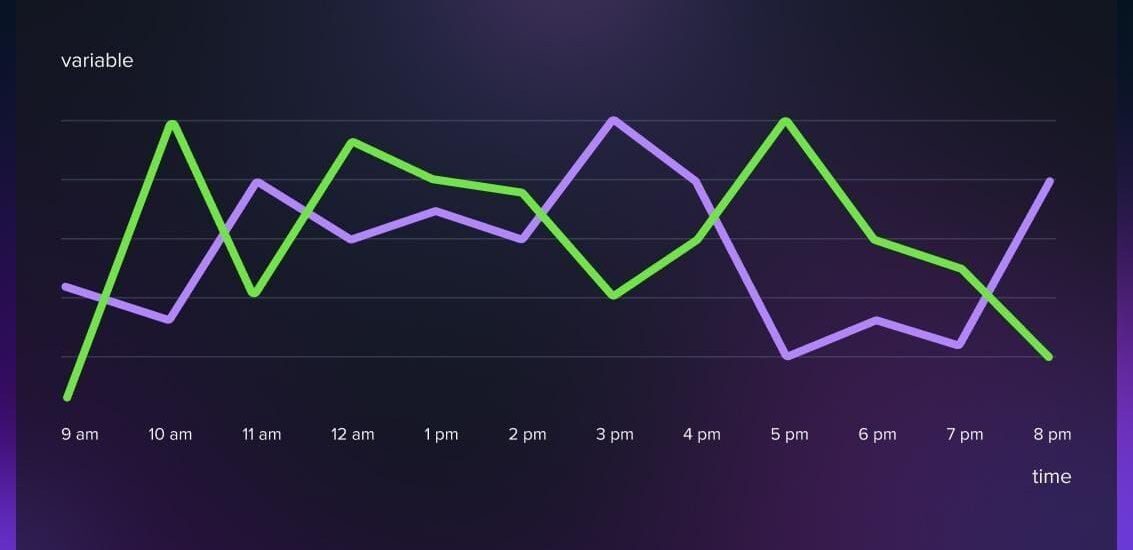
Time series analysis is a crucial component of machine learning that deals with data points indexed in time order. It has numerous applications across various industries, from finance and healthcare to weather forecasting and retail.
One of the key features of time series data is its temporal dependency, where each data point is influenced by its previous values. This makes traditional machine learning techniques less effective, as they often assume independence between data points. Time series analysis techniques, on the other hand, take into account this temporal structure to make more accurate predictions.
Key Concepts in Time Series Analysis
There are several fundamental concepts in time series analysis that form the basis for building predictive models:
- Trend: The long-term movement or directionality of the data over time.
- Seasonality: Regular patterns or fluctuations that occur at specific intervals.
- Stationarity: A property where statistical properties such as mean and variance remain constant over time.
- Autocorrelation: The correlation between a time series and a lagged version of itself.
Machine Learning Techniques for Time Series Analysis
In recent years, machine learning algorithms have been increasingly applied to time series analysis due to their ability to capture complex patterns and relationships in data. Some popular techniques include:
- ARIMA (AutoRegressive Integrated Moving Average): A classic method for modelling time series data based on its past values, trends, and seasonality.
- LSTM (Long Short-Term Memory): A type of recurrent neural network that is well-suited for capturing long-term dependencies in sequential data like time series.
- CNN (Convolutional Neural Network): While commonly used for image processing, CNNs can also be adapted for analysing one-dimensional sequences like time series data.
Benefits of Time Series Analysis in Machine Learning
The integration of time series analysis with machine learning offers several advantages:
- Better Forecasting Accuracy: By considering temporal dependencies, predictive models can make more accurate forecasts compared to traditional methods.
- Anomaly Detection: Time series analysis can help detect unusual patterns or outliers in the data that may indicate anomalies or potential issues.
- Data-Driven Decision Making: By leveraging historical trends and patterns, businesses can make informed decisions based on predictive insights generated by machine learning models.
In conclusion, time series analysis plays a vital role in unlocking valuable insights from temporal data using machine learning techniques. As technology continues to evolve, the synergy between these two fields will drive innovation and empower businesses to make smarter decisions based on accurate predictions derived from historical trends.
6 Essential Tips for Effective Machine Learning in Time Series Analysis
- Ensure your time series data is stationary before applying machine learning models.
- Consider using techniques like differencing or transformations to make the data stationary.
- Use cross-validation methods such as time series split for model evaluation to account for temporal dependencies.
- Explore different algorithms like ARIMA, SARIMA, or Prophet for time series forecasting tasks.
- Feature engineering plays a crucial role in capturing relevant patterns in time series data.
- Regularly monitor and update your time series models as new data becomes available to maintain accuracy.
Ensure your time series data is stationary before applying machine learning models.
To maximise the effectiveness of machine learning models in time series analysis, it is crucial to ensure that your time series data is stationary. Stationarity implies that the statistical properties of the data, such as mean and variance, remain constant over time. By transforming non-stationary data into a stationary form, you can enhance the accuracy and reliability of your predictive models. This step is essential for capturing meaningful patterns and relationships within the data, ultimately leading to more robust insights and forecasts.
Consider using techniques like differencing or transformations to make the data stationary.
When conducting time series analysis in machine learning, it is essential to consider utilising techniques such as differencing or transformations to ensure that the data is stationary. Stationarity, where statistical properties remain constant over time, is a key assumption for many time series models. By applying differencing or transformations to the data, we can remove trends and seasonality, making it more suitable for accurate modelling and prediction. This process helps in capturing meaningful patterns and relationships within the data, ultimately enhancing the effectiveness of machine learning algorithms in analysing time series data.
Use cross-validation methods such as time series split for model evaluation to account for temporal dependencies.
When conducting time series analysis in machine learning, it is essential to utilise cross-validation methods like time series split for model evaluation. By incorporating such techniques, one can effectively address the temporal dependencies present in the data. Time series split allows for the validation of a model’s performance by preserving the sequential order of data points, ensuring that the model is evaluated in a realistic temporal context. This approach helps to produce more reliable and accurate assessments of a model’s predictive capabilities when working with time series data.
Explore different algorithms like ARIMA, SARIMA, or Prophet for time series forecasting tasks.
When delving into time series analysis for forecasting tasks, it is essential to explore a variety of algorithms to identify the most suitable approach. Algorithms such as ARIMA, SARIMA, or Prophet offer distinct methodologies and capabilities that can enhance the accuracy and efficiency of time series forecasting. By experimenting with different algorithms, researchers and data scientists can uncover the strengths of each method and select the one that best aligns with the specific characteristics and patterns of the data being analysed. This exploration process not only broadens one’s understanding of time series analysis but also enables the creation of more robust and reliable predictive models.
Feature engineering plays a crucial role in capturing relevant patterns in time series data.
Feature engineering is a critical aspect when it comes to analysing time series data using machine learning techniques. By carefully selecting and creating meaningful features, data scientists can effectively capture and highlight the essential patterns hidden within the temporal data. These engineered features serve as the building blocks for predictive models, enabling them to better understand the underlying relationships and structures present in the time series data. In essence, feature engineering acts as a bridge between raw data and actionable insights, enhancing the accuracy and performance of machine learning models in extracting valuable information from time-dependent datasets.
Regularly monitor and update your time series models as new data becomes available to maintain accuracy.
Regularly monitoring and updating your time series models as new data becomes available is essential to ensure the accuracy and relevance of your predictions. By incorporating fresh data into your models, you can capture changing patterns and trends in the time series, enabling more precise forecasting and decision-making. This proactive approach not only helps maintain the performance of your machine learning models but also ensures that they continue to provide valuable insights that align with the dynamic nature of the data over time.