
Understanding Machine Learning and Artificial Intelligence
In recent years, the terms Machine Learning (ML) and Artificial Intelligence (AI) have become increasingly prevalent in discussions about technology and its impact on society. While often used interchangeably, they refer to distinct concepts that are revolutionising various industries.
What is Artificial Intelligence?
Artificial Intelligence refers to the simulation of human intelligence processes by machines, particularly computer systems. These processes include learning (the acquisition of information and rules for using it), reasoning (using rules to reach approximate or definite conclusions), and self-correction. AI can be classified into two categories:
- Narrow AI: This type of AI is designed to perform a narrow task, such as facial recognition or internet searches.
- General AI: A more advanced form that possesses the ability to perform any intellectual task that a human being can do. As of now, this remains largely theoretical.
The Role of Machine Learning
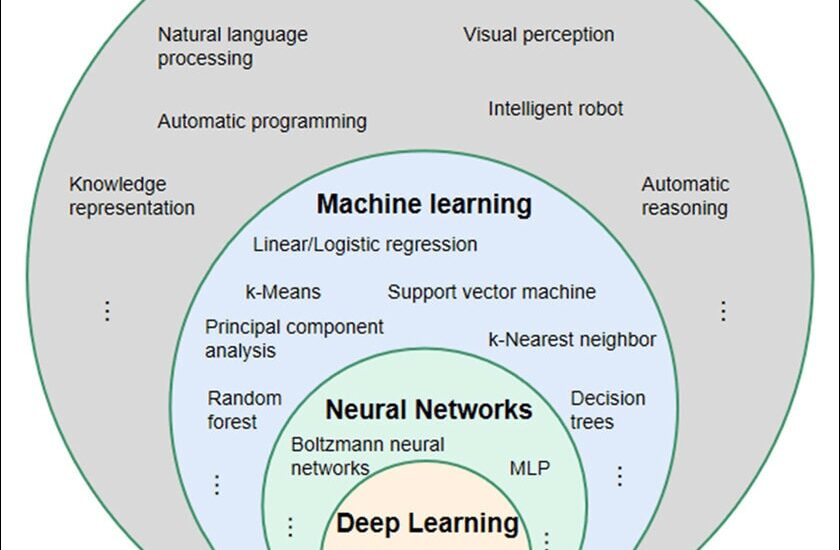
Machine Learning, a subset of AI, involves the use of algorithms and statistical models that enable computers to improve their performance on tasks through experience. It is based on the idea that systems can learn from data, identify patterns, and make decisions with minimal human intervention.
Types of Machine Learning
The main types of machine learning include:
- Supervised Learning: The model is trained on a labelled dataset, which means that each training example is paired with an output label.
- Unsupervised Learning: The model works with unlabelled data and tries to find hidden patterns or intrinsic structures in input data.
- Semi-supervised Learning: Combines both labelled and unlabelled data for training – typically a small amount of labelled data with a large amount of unlabelled data.
- Reinforcement Learning: The model learns by interacting with its environment, receiving rewards for performing actions that bring it closer to achieving its goal.
The Impact on Industries
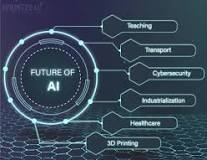
The integration of ML and AI technologies across different sectors has led to significant advancements. In healthcare, AI algorithms assist in diagnosing diseases at an early stage. In finance, they help detect fraudulent activities by analysing transaction patterns. Moreover, in transportation, autonomous vehicles are becoming increasingly viable due to these technologies.
The Future of ML and AI
The potential applications for ML and AI are vast and continually evolving. As these technologies advance further, they promise greater efficiencies across various domains while also posing ethical considerations regarding privacy and employment. Balancing innovation with responsibility will be crucial as society navigates this transformative era.
The journey into the world shaped by machine learning and artificial intelligence has only just begun, promising exciting developments ahead.
Understanding Machine Learning and Artificial Intelligence: Key Questions Answered
- What is the difference between Machine Learning and Artificial Intelligence?
- How does Machine Learning work?
- What are the main types of Machine Learning algorithms?
- What are some real-world applications of Artificial Intelligence?
- Can AI replace human jobs?
- What ethical considerations surround the use of AI in society?
- How can businesses benefit from implementing Machine Learning technologies?
- Are there any limitations to current AI technology?
- What skills are required to pursue a career in ML and AI?
What is the difference between Machine Learning and Artificial Intelligence?
Machine Learning (ML) and Artificial Intelligence (AI) are closely related yet distinct concepts within the realm of computer science. AI is a broad field that encompasses the creation of systems capable of performing tasks that typically require human intelligence, such as reasoning, problem-solving, and understanding language. It aims to create machines that can mimic cognitive functions. On the other hand, Machine Learning is a subset of AI focused specifically on the development of algorithms and statistical models that allow computers to learn from and make predictions or decisions based on data. While AI can include rule-based systems and other approaches not reliant on learning from data, ML is characterised by its ability to improve performance through experience without being explicitly programmed for specific tasks. In essence, all machine learning is a form of artificial intelligence, but not all artificial intelligence involves machine learning.
How does Machine Learning work?
Machine Learning operates by utilising algorithms and statistical models to enable computers to learn from data, identify patterns, and make decisions without explicit programming. The process involves training a model on a dataset, allowing it to generalise and predict outcomes based on new, unseen data. Through iterations of feeding data into the model, adjusting parameters, and evaluating performance, Machine Learning algorithms improve their accuracy and efficiency over time. This iterative learning process lies at the core of how Machine Learning works, enabling systems to adapt and evolve based on the information they receive.
What are the main types of Machine Learning algorithms?
One of the frequently asked questions in the realm of Machine Learning and Artificial Intelligence is: “What are the main types of Machine Learning algorithms?” Machine Learning algorithms can be broadly categorised into several types, including Supervised Learning, Unsupervised Learning, Semi-supervised Learning, and Reinforcement Learning. Each type serves a specific purpose and has its unique characteristics. Supervised Learning involves training a model on labelled data to make predictions, while Unsupervised Learning focuses on finding patterns in unlabelled data. Semi-supervised Learning combines both labelled and unlabelled data for training, and Reinforcement Learning enables models to learn through interaction with their environment. Understanding these different types of algorithms is essential for harnessing the power of Machine Learning in various applications.
What are some real-world applications of Artificial Intelligence?
Artificial Intelligence (AI) has permeated numerous aspects of everyday life, offering a wide range of real-world applications that enhance efficiency and decision-making. In healthcare, AI algorithms are utilised for early diagnosis and personalised treatment plans, significantly improving patient outcomes. The financial sector benefits from AI through fraud detection systems that analyse transaction patterns in real-time. In the realm of customer service, chatbots powered by AI provide instant support and improve user experience by handling queries efficiently. Additionally, AI is revolutionising transportation with the development of autonomous vehicles that promise safer and more efficient travel. In retail, AI-driven recommendation engines personalise shopping experiences by analysing consumer behaviour and preferences. These applications demonstrate the transformative potential of AI across various industries, driving innovation and improving quality of life.
Can AI replace human jobs?
The question of whether AI can replace human jobs is a topic of significant debate. While AI and machine learning technologies have the potential to automate certain tasks, particularly those that are repetitive or data-intensive, they are unlikely to completely replace human jobs. Instead, these technologies are more likely to transform the nature of work by taking over routine tasks and allowing humans to focus on more complex and creative responsibilities. This shift could lead to increased productivity and the creation of new job opportunities in areas such as AI development, maintenance, and oversight. However, it also necessitates a focus on reskilling and upskilling the workforce to adapt to changing demands. Ultimately, while AI may change how some jobs are performed, human skills such as critical thinking, empathy, and creativity remain irreplaceable.
What ethical considerations surround the use of AI in society?
The use of AI in society brings about several ethical considerations that require careful attention. One major concern is privacy, as AI systems often rely on large datasets that may include personal information, raising questions about data protection and consent. Additionally, there is the risk of bias in AI algorithms, which can perpetuate or even exacerbate existing inequalities if not properly addressed. Transparency is another critical issue; the decision-making processes of AI systems can be opaque, making it difficult for users to understand how conclusions are reached. This lack of transparency can lead to accountability challenges when AI systems make errors or cause harm. Furthermore, the impact of AI on employment raises ethical questions about job displacement and the need for retraining workers in a rapidly changing job market. As AI continues to evolve, it is essential for developers, policymakers, and society at large to engage in ongoing dialogue to ensure that these technologies are used responsibly and equitably.
How can businesses benefit from implementing Machine Learning technologies?
Businesses can reap numerous benefits from implementing Machine Learning (ML) technologies. By harnessing the power of ML algorithms, businesses can gain valuable insights from vast amounts of data, enabling them to make data-driven decisions with greater accuracy and efficiency. ML can automate repetitive tasks, streamline processes, and improve operational efficiency. Additionally, ML technologies can enhance customer experience by personalising interactions and predicting customer preferences. Ultimately, integrating ML into business operations can lead to increased productivity, cost savings, and a competitive edge in today’s rapidly evolving market landscape.
Are there any limitations to current AI technology?
Current AI technology, while impressive, does have several limitations. One of the primary constraints is its reliance on large volumes of data for training, which can lead to issues with privacy and data security. Moreover, AI systems often lack true understanding and reasoning capabilities, meaning they can struggle with tasks requiring common sense or contextual awareness. They are also typically designed for narrow applications and may not perform well outside their specific domain. Additionally, AI models can be biased if trained on unrepresentative datasets, leading to unfair or inaccurate outcomes. Finally, the high computational power required for advanced AI processes can be a barrier to implementation in resource-constrained environments. These limitations highlight the importance of ongoing research and development to enhance the capabilities and ethical use of AI technologies.
What skills are required to pursue a career in ML and AI?
To pursue a career in Machine Learning (ML) and Artificial Intelligence (AI), individuals need a combination of technical and analytical skills. Proficiency in programming languages such as Python, R, or Java is essential for developing algorithms and models. A solid understanding of mathematics, including statistics, linear algebra, and calculus, is crucial for data analysis and model building. Additionally, strong problem-solving abilities, critical thinking skills, and the ability to work with large datasets are highly valued in the field of ML and AI. Continuous learning and staying updated on the latest advancements in technology are also key to a successful career in this rapidly evolving domain.