
How to Read an SEO Report for Your Website
An SEO report provides a clear picture of how well a website is performing in search engines and where there is room to improve. It brings together information about visibility, traffic, technical health and content, helping website owners make informed decisions rather than relying on guesswork.
Whether you run a small business website or manage a large online shop, reviewing SEO performance regularly can help you spot problems, identify opportunities and measure the impact of your work.
What is an SEO report?
An SEO report is a summary of a website’s performance in organic search. It may cover how often the site appears in search results, which pages attract visitors, what people search for before they arrive, and whether technical issues could be affecting visibility.
A useful report does more than list figures. It explains what those figures mean, highlights important changes and recommends practical next steps.
Key areas covered in a website SEO report
Search visibility and rankings
Reports often track a selection of keywords to show where pages appear in search results. Rankings can help indicate progress, but they should not be viewed in isolation. Search results vary according to location, device and personalisation, and a strong position is only valuable if it reaches the right audience.
Organic traffic
Organic traffic refers to visits that come from unpaid search results. A report may show the number of visits over time, the pages receiving the most traffic and whether visits are increasing or declining. Changes should be considered alongside seasonality, marketing activity, website updates and wider search trends.
Clicks and impressions
Search performance data commonly includes impressions and clicks. An impression is recorded when a page appears in a search result; a click occurs when someone selects it. Comparing the two can help reveal whether pages are attracting attention and whether titles and descriptions could be made more relevant.
Technical SEO
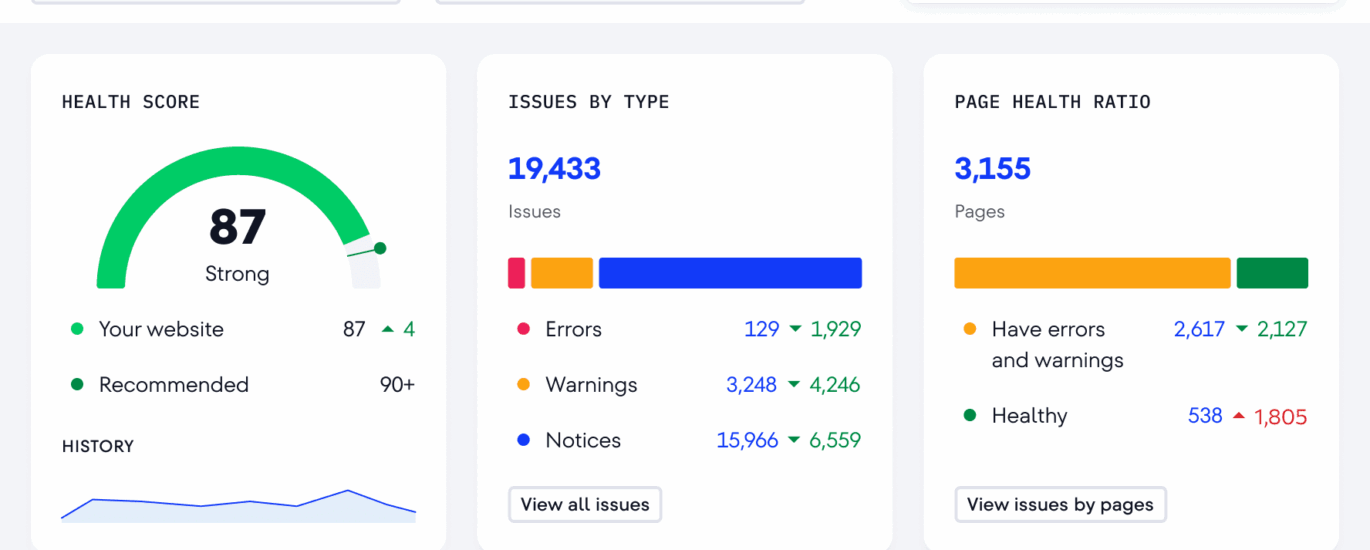
Technical checks look at whether search engines can access, understand and index a website. An SEO report may identify broken links, crawl errors, duplicate pages, slow-loading content or problems with mobile usability. It may also review redirects, XML sitemaps, secure connections and page structure.
Content and on-page optimisation
On-page analysis assesses the content and elements of individual pages. This can include page titles, headings, meta descriptions, internal links and the use of relevant search terms. The aim is not to repeat keywords unnecessarily, but to make each page useful, clear and closely matched to what visitors are looking for.
Links and authority
Links from other websites can help search engines discover pages and assess their credibility. Reports may summarise links pointing to a site, referring domains and potentially harmful or irrelevant links. Link data needs careful interpretation: quality and relevance matter more than simply accumulating a high number of links.
How to interpret the results
Start by comparing performance over a meaningful period, such as month on month or year on year. Look for sustained patterns rather than reacting to a single day or week. Then connect the data to business goals: more visits are not necessarily beneficial if they do not lead to enquiries, purchases or other valuable actions.
It is also useful to separate symptoms from causes. A fall in traffic could relate to a technical error, a change in rankings, outdated content, seasonal demand or a shift in how people search. Further investigation is often needed before deciding what to change.
Turning an SEO report into action
A practical report should lead to a prioritised plan. A sensible order is to:
- Fix critical technical issues that prevent pages from being crawled or indexed.
- Improve important pages that already receive impressions but attract few clicks.
- Update or expand content that no longer answers visitors’ questions effectively.
- Strengthen internal links so users and search engines can find key pages.
- Measure relevant outcomes, such as qualified enquiries, sales or newsletter sign-ups.
Priorities should reflect the likely impact, the effort required and the value of the pages involved. Not every recommendation needs to be tackled at once.
How often should you review an SEO report?
For many websites, a monthly review is a useful starting point. Larger sites or websites undergoing a redesign may benefit from more frequent monitoring, particularly for technical issues. SEO improvements can take time to influence search performance, so allow enough time to assess results while continuing to check for problems.
Make your report useful
The best SEO report is accurate, easy to understand and focused on decisions. It should explain what is working, what needs attention and how progress will be measured. By reviewing the right indicators consistently, you can make steady improvements to your website’s search visibility and provide a better experience for visitors.
Essential Tips for Enhancing Your Website’s SEO Report: A Comprehensive Guide
- Check organic traffic trends over time.
- Track keyword rankings for key pages.
- Review backlinks for quality and relevance.
- Flag broken links and crawl errors.
- Measure page speed and mobile usability.
- List clear actions, owners and deadlines.
Check organic traffic trends over time.
Check your website’s organic traffic trends over time to see whether visits from unpaid search results are rising, falling or staying steady. Compare performance across consistent periods, such as month on month or year on year, and consider seasonal patterns or changes to your website that may affect the figures. A sustained change can point to opportunities or issues worth investigating, but traffic is only part of the picture: also assess whether those visits lead to valuable actions, such as enquiries or sales.
Track keyword rankings for key pages.
Track keyword rankings for your key pages to understand how visible they are in search results for the terms that matter to your business. Review changes over time rather than focusing on a single position, and compare rankings with impressions, clicks and conversions to see whether improved visibility is bringing valuable visitors to your website. Use the findings to identify pages that may need clearer content, stronger on-page optimisation or better internal links.
Review backlinks for quality and relevance.
Review your website’s backlinks to check that they come from trustworthy, relevant sources. Links from respected websites in your industry can support your site’s credibility, while links from spammy or unrelated sites may offer little value and could warrant closer investigation. In your SEO report, look beyond the total number of backlinks: assess the referring websites, the context of each link and whether your backlink profile is growing naturally.
Flag broken links and crawl errors.
Flag broken links and crawl errors in your website’s SEO report so they can be investigated and fixed promptly. Broken links frustrate visitors and can make it harder for search engines to discover important pages, while crawl errors may prevent content from being indexed. Prioritise issues affecting key pages, then check links and crawling again after making changes.
Measure page speed and mobile usability.
Measure page speed and mobile usability to understand how easily visitors can use your website. Slow-loading pages may frustrate users and lead them to leave, while layouts that are difficult to navigate on a phone can make it harder to find information or complete a purchase. Include loading performance and mobile usability in your SEO report, then prioritise fixes such as compressing images, reducing unnecessary scripts and improving responsive page layouts.
List clear actions, owners and deadlines.
A useful SEO report should turn findings into a clear action plan. For each recommendation, specify the task, assign an owner and set a realistic deadline. This makes responsibilities clear, helps the team prioritise work and makes it easier to track progress at the next review.