
Time Series Analysis and Its Applications
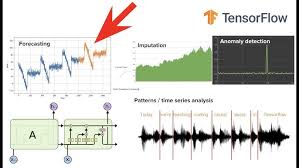
Time series analysis is a statistical technique used to analyse data points collected over time intervals. It involves studying the patterns, trends, and relationships within the data to make informed predictions and decisions. Time series data is prevalent in various fields, including finance, economics, weather forecasting, and healthcare.
Applications of Time Series Analysis:
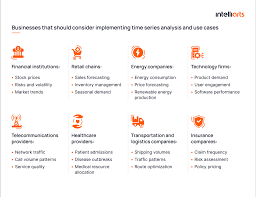
- Financial Forecasting: In finance, time series analysis is used to predict stock prices, currency exchange rates, and other financial indicators. By analysing past data patterns, investors can make better-informed decisions about future market trends.
- Demand Forecasting: Retailers use time series analysis to forecast demand for products based on historical sales data. This helps in inventory management, production planning, and pricing strategies.
- Economic Trend Analysis: Economists use time series analysis to study economic indicators such as GDP growth rates, unemployment rates, and inflation trends. This information is crucial for policy-making and understanding the overall economic health of a country.
- Healthcare Predictive Modelling: Time series analysis is used in healthcare to predict disease outbreaks, patient admissions, and treatment outcomes. By analysing patient data over time, healthcare providers can improve patient care and resource allocation.
- Climatology and Weather Forecasting: Meteorologists use time series analysis to study weather patterns over time. This helps in predicting future weather conditions accurately, enabling early warnings for natural disasters like hurricanes or droughts.
Key Techniques in Time Series Analysis:
Some common techniques used in time series analysis include:
- Trend Analysis: Identifying long-term trends or patterns in the data that indicate overall direction.
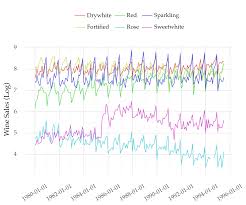
- Seasonal Decomposition: Separating the data into seasonal components to understand recurring patterns within specific time periods.
- Autocorrelation Function (ACF): Examining the correlation between a variable’s current value and its past values at different lags.
- Moving Average (MA) Models: Using past observations’ moving averages to forecast future values.
- Autoregressive Integrated Moving Average (ARIMA) Models: Combining autoregression with moving average components to model complex time series data.
In conclusion, time series analysis plays a vital role in understanding historical data patterns and making predictions for the future across various industries. By applying advanced statistical techniques like ARIMA models or exponential smoothing methods, analysts can extract valuable insights from time-dependent datasets that drive informed decision-making processes.
Exploring Time Series Analysis: Types, Applications, and Cross-Disciplinary Uses
- What are the 4 types of time series?
- What are the applications of time series analysis?
- What is time series analysis and its applications?
- What is time series analysis and its application in geography?
- What are the applications of time series in business?
- What are the 7 types of statistical analysis?
- What are the applications of time series analysis in medicine?
What are the 4 types of time series?
In the context of time series analysis, there are four main types of time series data that are commonly encountered: trend, seasonality, cyclic, and irregular components. The trend component represents the long-term direction or overall pattern in the data. Seasonality refers to recurring patterns or fluctuations that follow a specific time frame, such as daily, weekly, or monthly cycles. Cyclic components exhibit repetitive but non-seasonal patterns over a more extended period. Irregular components capture random fluctuations or noise in the data that cannot be attributed to any specific trend, seasonality, or cycle. Understanding and identifying these different types of time series components are crucial for accurate analysis and forecasting in various fields.
What are the applications of time series analysis?
Time series analysis finds diverse applications across various fields, making it a valuable tool for extracting insights from temporal data. One commonly asked question is, “What are the applications of time series analysis?” Time series analysis is crucial in financial forecasting to predict stock prices and currency exchange rates. It also plays a significant role in demand forecasting for retailers to manage inventory effectively. Moreover, economists use time series analysis to study economic indicators like GDP growth rates and inflation trends. In healthcare, predictive modelling based on time series data helps in predicting disease outbreaks and improving patient care. Additionally, meteorologists utilise time series analysis for weather forecasting to provide accurate predictions and early warnings for natural disasters.
What is time series analysis and its applications?
Time series analysis is a statistical method used to examine data points collected over successive time intervals to identify patterns, trends, and relationships within the data. Its applications span across various fields such as finance, economics, healthcare, and meteorology. In essence, time series analysis enables analysts to make predictions based on historical data patterns, facilitating better decision-making processes in areas like financial forecasting, demand prediction, economic trend analysis, healthcare predictive modelling, and weather forecasting. By leveraging techniques like trend analysis, seasonal decomposition, autocorrelation function (ACF), moving average (MA) models, and autoregressive integrated moving average (ARIMA) models, time series analysis provides valuable insights that drive strategic planning and informed actions in diverse industries.
What is time series analysis and its application in geography?
Time series analysis is a statistical method used to analyse data points collected over successive time intervals. In the field of geography, time series analysis plays a crucial role in studying and predicting various spatial and temporal phenomena. By examining trends, patterns, and relationships within geographical data over time, researchers can gain insights into environmental changes, land use dynamics, climate variations, urban growth patterns, and natural disasters’ occurrences. Time series analysis in geography enables professionals to make informed decisions regarding resource management, urban planning, disaster preparedness, and environmental conservation based on historical data trends and future projections.
What are the applications of time series in business?
Time series analysis plays a crucial role in various business applications, offering valuable insights into past trends and future predictions. In the realm of business, time series analysis is widely used for forecasting sales, demand planning, inventory management, and financial performance evaluation. By analysing historical data patterns, businesses can make informed decisions regarding resource allocation, marketing strategies, and operational efficiency. Additionally, time series analysis helps in identifying seasonality and trends within business data, enabling companies to adapt to changing market conditions and stay competitive in today’s dynamic business landscape.
What are the 7 types of statistical analysis?
One frequently asked question regarding time series analysis and its applications is, “What are the 7 types of statistical analysis?” While there isn’t a definitive list of only seven types of statistical analysis, common approaches include descriptive statistics, inferential statistics, regression analysis, hypothesis testing, correlation analysis, survival analysis, and time series analysis. Time series analysis specifically focuses on studying data points collected over time intervals to identify patterns, trends, and relationships within the data. By utilising techniques such as trend analysis, seasonal decomposition, and autoregressive integrated moving average (ARIMA) models, analysts can extract valuable insights from time-dependent datasets to make informed predictions and decisions across various fields.
What are the applications of time series analysis in medicine?
Time series analysis plays a crucial role in medicine by offering valuable insights and predictions based on temporal data patterns. In the field of healthcare, time series analysis is applied to various aspects such as disease progression monitoring, patient outcome prediction, medication effectiveness evaluation, and resource allocation optimisation. By analysing time-dependent data collected from patient records, medical sensors, or clinical trials, healthcare professionals can make informed decisions to improve diagnosis accuracy, treatment planning, and overall patient care. Time series analysis in medicine enables early detection of health trends, forecasting of disease outbreaks, and personalised healthcare interventions tailored to individual patient needs.