
The Power of Multivariate Time Series Analysis
Time series data, which consists of observations recorded at different points in time, is prevalent in various fields such as finance, economics, weather forecasting, and more. While analysing univariate time series can provide valuable insights, many real-world scenarios require the analysis of multiple related variables simultaneously. This is where multivariate time series analysis comes into play.
What is Multivariate Time Series Analysis?
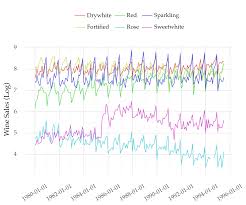
Multivariate time series analysis involves the simultaneous study of multiple interrelated time series datasets. By considering the relationships between different variables over time, analysts can uncover complex patterns and dependencies that may not be apparent when analysing each variable in isolation.
Applications of Multivariate Time Series Analysis
There are numerous applications of multivariate time series analysis across various domains:
- Finance: Predicting stock prices by considering factors such as market indices, company performance metrics, and economic indicators simultaneously.
- Healthcare: Monitoring patient vital signs to predict health outcomes based on a combination of medical data.
- Meteorology: Forecasting weather conditions by analysing multiple meteorological variables like temperature, humidity, and wind speed.
- Social Sciences: Studying the relationships between different socio-economic indicators to understand societal trends and patterns.
Techniques in Multivariate Time Series Analysis
To analyse multivariate time series data effectively, various techniques can be employed:
- Vector Autoregression (VAR): A statistical model that captures the linear interdependencies between multiple time series variables.
- Cointegration Analysis: Identifying long-term equilibrium relationships among non-stationary variables.
- Multivariate GARCH Models: Modelling volatility clustering and spillover effects in multiple financial time series.
- Dynamical Systems Approaches: Using differential equations to model the dynamic interactions between variables over time.
The Future of Multivariate Time Series Analysis
As data collection capabilities continue to expand and evolve, the importance of analysing multivariate time series data will only grow. With advancements in machine learning and artificial intelligence, analysts can leverage sophisticated algorithms to extract deeper insights from complex multidimensional datasets. By harnessing the power of multivariate time series analysis, businesses and researchers can make more informed decisions and predictions based on a comprehensive understanding of interconnected variables over time.
Seven Essential Tips for Effective Multivariate Time Series Analysis
- Understand the data
- Preprocess the data
- Choose appropriate models
- Consider dimensionality reduction techniques
- Evaluate model performance
- Account for dependencies
- Validate results
Understand the data
To effectively conduct multivariate time series analysis, it is crucial to begin by thoroughly understanding the data at hand. This involves exploring the relationships between the different variables over time, identifying any patterns or trends, and determining the underlying structure of the dataset. By gaining a comprehensive understanding of the data, analysts can make informed decisions about which techniques and models to apply, ensuring that the analysis yields meaningful insights and accurate predictions.
Preprocess the data
Preprocessing the data is a crucial step in multivariate time series analysis as it helps ensure the quality and suitability of the dataset for further analysis. Tasks such as handling missing values, normalising variables, removing outliers, and detrending can significantly impact the accuracy and reliability of the results obtained from the analysis. By carefully preprocessing the data before applying advanced analytical techniques, analysts can enhance the robustness of their models and uncover meaningful insights hidden within the multivariate time series data.
Choose appropriate models
When conducting multivariate time series analysis, a crucial tip is to choose appropriate models that can effectively capture the complex relationships between multiple variables over time. Selecting the right model, such as Vector Autoregression (VAR), Multivariate GARCH Models, or Dynamical Systems Approaches, is essential for accurate forecasting and insightful data interpretation. By carefully assessing the characteristics of the data and understanding the interdependencies between variables, analysts can ensure that their chosen models align with the underlying dynamics of the multivariate time series, leading to more reliable results and valuable insights.
Consider dimensionality reduction techniques
When delving into multivariate time series analysis, it is crucial to consider employing dimensionality reduction techniques. By reducing the number of variables or features in the dataset, these techniques can help simplify the analysis process, improve computational efficiency, and mitigate the risk of overfitting. Methods such as principal component analysis (PCA) or t-distributed stochastic neighbour embedding (t-SNE) can be utilised to transform high-dimensional data into a lower-dimensional space while preserving essential information. Incorporating dimensionality reduction techniques in multivariate time series analysis can lead to more interpretable results and facilitate better decision-making based on the underlying patterns within the data.
Evaluate model performance
When conducting multivariate time series analysis, it is essential to evaluate the performance of the models developed. By assessing how well the model fits the data and its predictive accuracy, analysts can determine the effectiveness of their approach. Various metrics, such as mean squared error, root mean squared error, or correlation coefficients, can be used to quantify model performance. Additionally, techniques like cross-validation can help validate the model’s generalisation capabilities. Regularly evaluating model performance ensures that the analysis remains robust and reliable, enabling informed decision-making based on accurate predictions.
Account for dependencies
When conducting multivariate time series analysis, it is crucial to account for dependencies between the different variables being studied. By considering the relationships and interactions among the variables over time, analysts can uncover valuable insights and patterns that may be obscured when examining each variable in isolation. Accounting for dependencies allows for a more comprehensive understanding of how various factors influence each other and how they collectively contribute to the overall behaviour of the system being analysed.
Validate results
Validating results is a crucial step in multivariate time series analysis to ensure the accuracy and reliability of the findings. By validating the results obtained from models or algorithms against real-world data, analysts can assess the performance and generalisation capabilities of their approaches. This process helps in identifying potential errors, overfitting issues, or inconsistencies that may arise during the analysis. Through thorough validation, analysts can have confidence in the robustness of their models and make informed decisions based on trustworthy outcomes.