

The Importance of Conducting a Web Page SEO Check
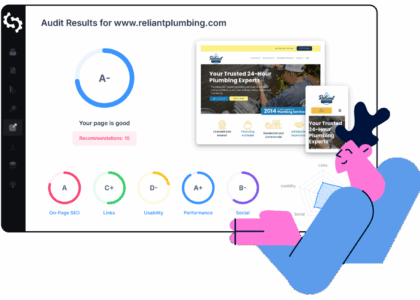
Search Engine Optimization (SEO) is crucial for ensuring that your website ranks well in search engine results and drives organic traffic. One essential aspect of SEO is conducting regular checks on your web pages to identify areas for improvement and optimisation.
Why Conduct a Web Page SEO Check?
By performing an SEO check on your web pages, you can:
- Identify and fix technical issues that may be hindering your site’s performance in search engines.
- Optimise on-page elements such as meta tags, headings, and content to improve visibility and relevance to search engines.
- Analyse keyword usage and ensure that your content aligns with the terms your target audience is searching for.
- Evaluate the overall user experience of your website, including page speed, mobile-friendliness, and ease of navigation.
- Monitor backlinks and internal linking structures to enhance the authority and credibility of your site.
Tools for Conducting a Web Page SEO Check
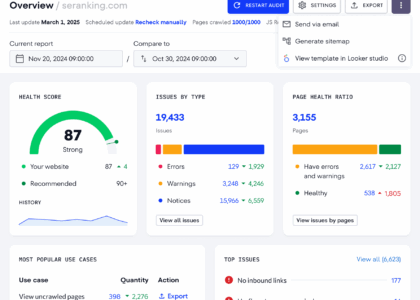
There are various tools available that can help you conduct a comprehensive SEO check on your web pages. These tools provide insights into key metrics such as keyword rankings, backlink profiles, site speed, and more. Some popular tools include:
- Google Search Console: Offers valuable data on how Google views your site and provides recommendations for improving its performance in search results.
- Moz Pro: Provides advanced SEO analytics, keyword research tools, and link building opportunities to enhance your site’s visibility.
- Semrush: Offers competitive analysis, keyword tracking, site audit tools, and more to help you optimise your web pages effectively.
In Conclusion
Conducting regular web page SEO checks is essential for maintaining the health and performance of your website in search engine results. By identifying areas for improvement and implementing best practices, you can enhance your site’s visibility, attract more organic traffic, and ultimately achieve better online success.
6 Essential Tips for Enhancing Your Web Page’s SEO
- Ensure your web page has a clear and descriptive title tag.
- Optimise your meta description to encourage users to click through to your website.
- Use relevant keywords in your headings and content, but avoid keyword stuffing.
- Optimise images by using descriptive filenames and alt text for better visibility in image searches.
- Improve page loading speed by compressing images, minifying CSS and JavaScript files, and leveraging browser caching.
- Create high-quality content that is valuable to users and encourages engagement.
Ensure your web page has a clear and descriptive title tag.
It is crucial to ensure that your web page has a clear and descriptive title tag for effective SEO. The title tag is one of the first elements that search engines and users see when they come across your website in search results. A well-crafted title tag not only helps search engines understand the content of your page but also entices users to click through by providing a concise summary of what the page is about. By incorporating relevant keywords and accurately reflecting the content of the page, you can improve your site’s visibility and attract more organic traffic.
Optimise your meta description to encourage users to click through to your website.
Optimising your meta description is a crucial step in improving your website’s click-through rate. A well-crafted meta description provides a concise and compelling summary of your web page’s content, enticing users to click on your link in search engine results. By incorporating relevant keywords and a clear call-to-action, you can enhance the visibility of your website and increase the likelihood of attracting quality traffic. Remember, the meta description is often the first impression users have of your page, so make it engaging and informative to drive more clicks and ultimately improve your site’s SEO performance.
Use relevant keywords in your headings and content, but avoid keyword stuffing.
To improve your website’s search engine ranking, it is important to use relevant keywords strategically in your headings and content. By incorporating keywords naturally into your text, you can signal to search engines what your web page is about and increase its visibility to potential visitors. However, it is crucial to avoid keyword stuffing – the practice of overloading your content with keywords in an attempt to manipulate search results. Instead, focus on creating high-quality, informative content that provides value to your audience while optimising it with relevant keywords for a balanced and effective SEO strategy.
Optimise images by using descriptive filenames and alt text for better visibility in image searches.
To enhance visibility in image searches and improve overall SEO performance, it is essential to optimise images by using descriptive filenames and alt text. By incorporating relevant keywords into file names and alt text, you provide search engines with valuable context about the content of your images. This practice not only helps in ranking higher in image search results but also enhances the accessibility of your website for users with visual impairments who rely on screen readers to understand image content. Optimising images in this way is a simple yet effective strategy to boost your web page’s SEO efforts.
Improve page loading speed by compressing images, minifying CSS and JavaScript files, and leveraging browser caching.
To enhance your website’s performance and boost its search engine ranking, it is crucial to focus on improving page loading speed. One effective tip is to optimise your web pages by compressing images, minifying CSS and JavaScript files, and leveraging browser caching. By reducing the file sizes of images and code, you can significantly decrease loading times, providing visitors with a seamless browsing experience. Additionally, setting up browser caching allows resources to be stored locally on a user’s device, further speeding up subsequent visits to your site. Implementing these strategies not only improves user satisfaction but also demonstrates to search engines that your website is well-optimised for performance.
Create high-quality content that is valuable to users and encourages engagement.
Creating high-quality content that is valuable to users and encourages engagement is a fundamental aspect of effective SEO practices. By producing content that is informative, relevant, and engaging, you not only attract the attention of your target audience but also establish credibility and authority in your industry. Valuable content that addresses the needs and interests of users not only improves your website’s visibility in search engine results but also fosters a loyal following and encourages user interaction, such as comments, shares, and backlinks. Ultimately, prioritising high-quality content creation is key to enhancing your website’s SEO performance and driving organic traffic to your site.