
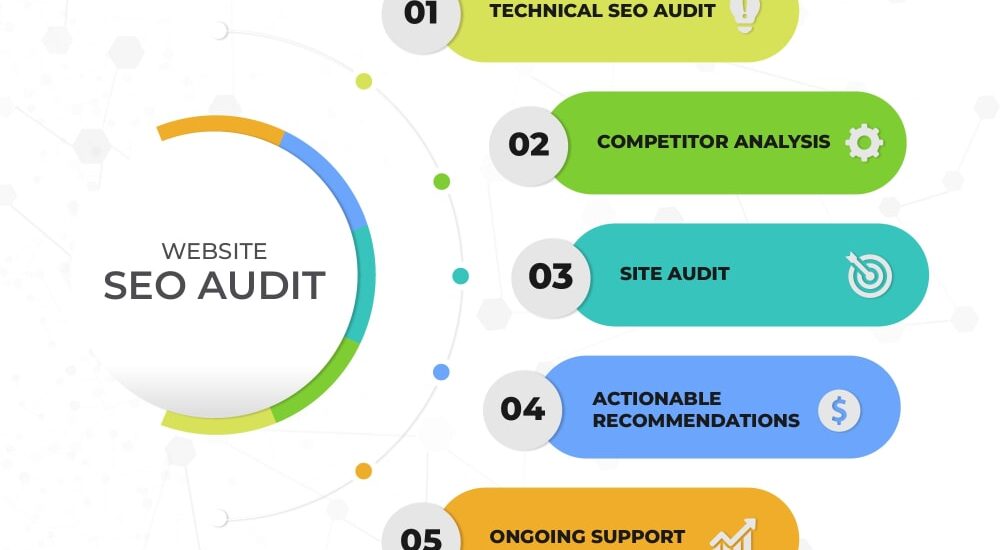
Website SEO Audit Services: A Practical Guide to Improving Search Performance
A website can look polished and still struggle to attract visitors from search engines. Technical issues, unclear content and weak site structure can all make it harder for search engines to understand a website—and for potential customers to find it. Website SEO audit services help identify these problems and turn them into a clear, prioritised plan for improvement.
What is a website SEO audit?
An SEO audit is a structured review of a website’s ability to be discovered, crawled, understood and ranked by search engines. It looks beyond individual keywords to assess the technical foundations of the site, the quality and relevance of its content, and how easily visitors can navigate it.
An audit does not guarantee specific rankings. Instead, it highlights barriers to organic search performance and recommends practical changes based on the website’s goals, audience and current condition.
What do SEO audit services cover?
The scope varies depending on the website, but a thorough audit commonly includes the following areas:
- Technical SEO: Checks how search engines access and index pages, including crawl errors, redirects, XML sitemaps, robots.txt rules and duplicate URLs.
- Site speed and mobile usability: Reviews loading performance and how well the website works on mobile devices and different screen sizes.
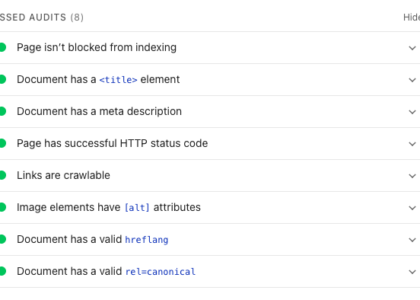
- On-page SEO: Assesses page titles, meta descriptions, headings, image alternative text, internal links and the use of relevant search terms.
- Content quality: Identifies pages that are outdated, thin, duplicated, unclear or poorly aligned with what visitors are looking for.
- Site structure: Examines navigation, URL organisation and internal linking to see whether important pages are easy to find.
- Organic performance: Where data is available, reviews search impressions, clicks, landing pages and changes in visibility.
- Accessibility and user experience: Considers whether the site is clear and usable for a broad range of visitors. These improvements can support a better overall experience, even when they are not direct ranking factors.
- Backlink profile: Reviews links from other websites, looking for patterns that may present opportunities or require further investigation.
Why invest in an SEO audit?
Without a clear diagnosis, SEO work can become a series of guesses. An audit helps businesses understand what is preventing their website from performing well and which changes are likely to make the biggest difference.
For example, an audit may reveal that key pages are not being indexed, that several pages target the same search intent, or that visitors have difficulty reaching important information. Addressing these issues can improve the foundations for organic growth and make future SEO activity more focused.
An audit can also be useful before a website redesign, after a significant drop in organic traffic, when launching a new site, or when a business wants to review its existing SEO strategy.
What should a good SEO audit deliver?
A useful audit should do more than produce a long list of errors. It should explain why each issue matters, which pages or users it affects, and what action is recommended. Recommendations should be prioritised so a business can tackle the most important work first.
Typical deliverables may include:
- A summary of the website’s main SEO strengths and weaknesses
- A list of technical and content issues, with supporting evidence
- Recommendations ordered by priority and likely effort
- Guidance on improvements to site structure and internal linking
- A review of relevant search opportunities and competing websites
- A discussion of next steps and how progress could be measured
How the audit process works
The process usually begins with a discussion about the business, its audience and its goals. This context helps ensure that recommendations are relevant rather than generic. The auditor may then review the website using specialist tools, analytics data and manual checks.
Once the analysis is complete, findings are grouped and prioritised. A good provider will explain the results in plain English and answer questions about implementation. Some businesses use the audit as a standalone report; others ask the provider to help carry out the recommended changes.
Choosing website SEO audit services
When comparing providers, look for a service that is tailored to your website rather than based on an automated score alone. Ask what the audit includes, what information the provider needs, and whether the final recommendations will be explained and prioritised.
It is also worth checking how the provider measures progress. Search performance can be affected by many factors, so be cautious of anyone promising guaranteed rankings or immediate results. A credible SEO audit should be transparent about its methods and realistic about what can be achieved.
Turning audit findings into action
The value of an SEO audit comes from acting on its findings. Start with the issues that could prevent important pages from being crawled or indexed, then address high-priority content and usability improvements. Keep a record of changes and review relevant performance data over time.
SEO is an ongoing process, and search results can change as websites, competitors and search systems evolve. A well-planned audit provides a clear starting point, helping businesses make informed improvements and build a stronger foundation for long-term organic visibility.
7 Key Benefits of Website SEO Audit Services
- Identify technical issues affecting visibility
- Improve website crawlability and indexation
- Highlight content gaps and duplication
- Strengthen site structure and internal links
- Prioritise SEO improvements by impact
- Enhance mobile usability and page speed
- Support informed, data-led decisions
6 Drawbacks of Website SEO Audit Services
- Can be costly for smaller businesses.
- Recommendations may require technical expertise.
- Audits can become outdated quickly.
- Results are not guaranteed.
- Some providers rely too heavily on automated tools.
- Implementing fixes can take time.
Identify technical issues affecting visibility
Website SEO audit services can uncover technical issues that prevent search engines from properly crawling, indexing or displaying your pages in search results. Problems such as broken links, slow loading times, duplicate content, incorrect redirects or misconfigured robots.txt files may reduce a website’s visibility. By identifying these issues and recommending practical fixes, an audit helps create a stronger technical foundation for organic search performance.
Improve website crawlability and indexation
A website SEO audit can uncover issues that prevent search engines from discovering, crawling or indexing important pages. By checking elements such as internal links, XML sitemaps, robots.txt rules, redirects and duplicate URLs, an audit helps identify where search engines may be wasting time or missing valuable content. Fixing these problems makes it easier for search engines to understand the site and include its relevant pages in search results, giving them a stronger opportunity to reach potential visitors.
Highlight content gaps and duplication
Website SEO audit services can reveal where your content is missing important information or repeating what is already covered elsewhere on your site. By identifying topics your audience is searching for, an audit can highlight useful content gaps to address. It can also uncover duplicate or very similar pages that may compete for visibility, helping you refine, combine or update content so each page has a clear purpose and offers distinct value to visitors.
Strengthen site structure and internal links
A website SEO audit can reveal whether your pages are organised in a clear, logical structure and whether visitors and search engines can easily find important content. By reviewing navigation and internal links, an audit can highlight orphaned pages, confusing pathways and missed opportunities to connect related topics. Improving these links helps people move around your site more easily and gives search engines a better understanding of how your pages relate to one another.
Prioritise SEO improvements by impact
Website SEO audit services help you prioritise improvements by their likely impact, so you can focus time and budget on the changes that matter most. Rather than working through a long list of issues at random, an audit can highlight urgent technical problems, important content gaps and high-value opportunities, while indicating the effort involved. This makes it easier to plan practical next steps, address the biggest barriers first and build a more effective SEO strategy over time.
Enhance mobile usability and page speed
A website SEO audit can reveal what is slowing your pages down and making them difficult to use on mobile devices. By identifying issues such as oversized images, unnecessary scripts, poor layouts and hard-to-use navigation, an audit helps you prioritise practical improvements. Faster-loading pages and a smoother mobile experience can make it easier for visitors to find information, stay on your site and complete key actions.
Support informed, data-led decisions
Website SEO audit services support informed, data-led decisions by showing how a site is performing and where improvements are most needed. Rather than relying on guesswork, businesses can use evidence such as crawl data, search visibility, page performance and user behaviour to prioritise changes. This helps focus time and budget on actions that address real issues and align with business goals.
Can be costly for smaller businesses.
Website SEO audit services can be costly for smaller businesses, particularly when they involve an in-depth technical review or ongoing consultancy. For businesses with limited budgets, the price may be difficult to justify alongside other marketing priorities. It’s worth comparing providers, checking exactly what the audit includes and choosing a service that focuses on the issues most relevant to your website, rather than paying for recommendations you may not have the resources to implement.
Recommendations may require technical expertise.
Some SEO audit recommendations, such as changing site architecture, fixing crawl errors or adding structured data, may require technical expertise. If your team lacks the necessary skills, putting the changes into practice could take longer or require support from a developer, adding to the cost of the audit. Before starting, check whether the provider explains each recommendation clearly and can advise on implementation or help you prioritise the work.
Audits can become outdated quickly.
One drawback of website SEO audit services is that their findings can become outdated quickly. Search engine algorithms, competitors’ websites and your own site can all change, so recommendations based on a single review may no longer reflect current conditions. An audit is best treated as a snapshot in time, with key findings revisited regularly and after major website updates.
Results are not guaranteed.
One limitation of website SEO audit services is that results are not guaranteed. An audit can identify issues and recommend improvements, but it cannot control search engine algorithms, competitor activity or changes in how people search. Even when recommendations are implemented correctly, improvements in rankings and organic traffic may take time—and outcomes can vary. A reputable provider should set realistic expectations and focus on clear, measurable progress rather than promising specific results.
Some providers rely too heavily on automated tools.
Some website SEO audit providers rely too heavily on automated tools, which can flag technical issues without understanding their context or business impact. This may lead to generic recommendations, false alarms or important problems being overlooked. Automated reports are useful for spotting patterns, but they should be supported by expert analysis and tailored advice that reflects the website’s goals, audience and structure.
Implementing fixes can take time.
One potential drawback of website SEO audit services is that implementing the recommended fixes can take time. Some changes, such as updating page titles, may be straightforward, while others could require technical development, content revisions or input from several teams. This means improvements may not happen immediately, particularly if a business has limited resources or a complex website.