
The Power of Machine Learning: Transforming Industries with Data
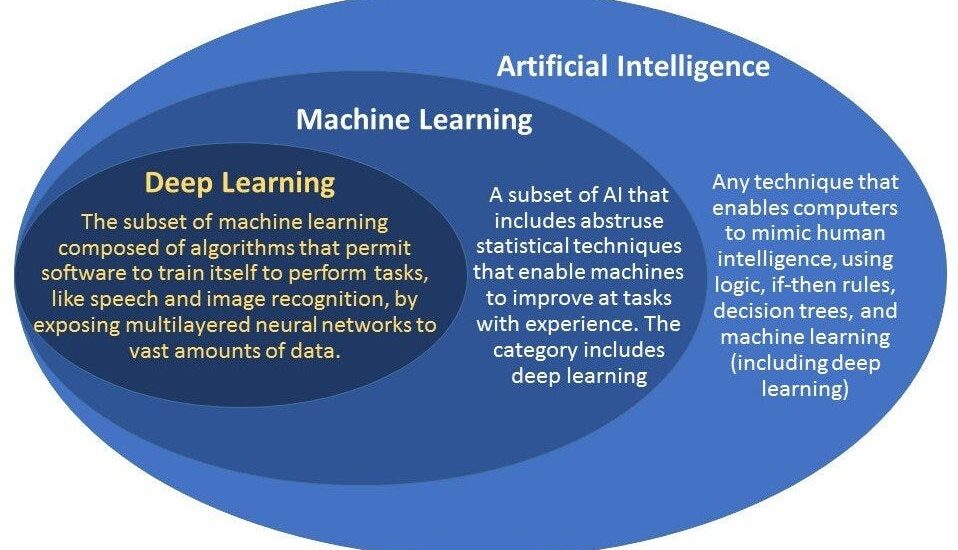
Machine learning, a subset of artificial intelligence, is revolutionising the way businesses and industries operate by harnessing the power of data. Through sophisticated algorithms and statistical models, machine learning enables computers to learn from and make predictions or decisions based on data without being explicitly programmed.
One of the key advantages of machine learning is its ability to uncover valuable insights and patterns from vast amounts of data that would be impossible for humans to process manually. This capability has transformed industries such as healthcare, finance, marketing, and more.
Healthcare
In healthcare, machine learning is being used to improve patient outcomes through predictive analytics. By analysing patient data such as medical records and test results, machine learning algorithms can identify patterns that help in diagnosing diseases at an early stage, recommending personalised treatment plans, and predicting potential health risks.
Finance
In the financial sector, machine learning is revolutionising fraud detection, risk assessment, and customer service. Banks and financial institutions use machine learning algorithms to detect fraudulent transactions in real-time, assess credit risk more accurately, and provide personalised recommendations to customers based on their financial behaviour.
Marketing
Machine learning has also transformed the marketing industry by enabling companies to target their audience more effectively and personalise marketing campaigns. By analysing consumer behaviour and preferences, machine learning algorithms can predict customer needs, optimise advertising strategies, and deliver tailored content to enhance customer engagement.
As machine learning continues to advance rapidly, its applications are expanding across various sectors. From self-driving cars to virtual assistants, recommendation systems to image recognition technologies – the possibilities are endless.
However, with great power comes great responsibility. It is crucial for businesses and organisations leveraging machine learning technologies to prioritise data privacy and security while ensuring transparency in their decision-making processes.
In conclusion, machine learning is not just a technological advancement but a transformative force that has the potential to reshape industries and drive innovation. By harnessing the power of data through machine learning algorithms, businesses can gain a competitive edge, improve efficiency, and unlock new opportunities for growth in the digital age.
Frequently Asked Questions About Machine Learning: Understanding the Basics, Types, and Applications
- What are the 4 basics of machine learning?
- What are the 3 types of machine learning?
- What is the difference between AI and ML?
- What is a machine learning algorithm?
- Can I teach myself machine learning?
- What is machine learning is used for?
- Is ML full of coding?
- What are the 3 types of learning in machine learning?
- What exactly machine learning?
What are the 4 basics of machine learning?
In the realm of machine learning, understanding the four fundamental concepts is crucial for grasping its essence. The four basics of machine learning encompass supervised learning, unsupervised learning, reinforcement learning, and semi-supervised learning. Supervised learning involves training a model on labelled data to make predictions or classifications. Unsupervised learning focuses on discovering patterns and relationships in unlabelled data. Reinforcement learning revolves around an agent learning to make decisions through trial and error based on feedback from its environment. Lastly, semi-supervised learning combines elements of both supervised and unsupervised learning by utilising a small amount of labelled data alongside a larger set of unlabelled data to enhance model performance and accuracy. Mastering these foundational principles paves the way for unlocking the full potential of machine learning applications across various domains.
What are the 3 types of machine learning?
Machine learning is typically categorised into three main types: supervised learning, unsupervised learning, and reinforcement learning. Supervised learning involves training a model on a labelled dataset, meaning that each training example is paired with an output label. The goal is for the model to learn a mapping from inputs to outputs and make accurate predictions on new, unseen data. Unsupervised learning, on the other hand, deals with unlabelled data where the system tries to learn patterns and structures from the input data without any explicit instructions. This type of machine learning is often used for clustering and association tasks. Reinforcement learning is a bit different; it involves training an agent to make a sequence of decisions by rewarding desired behaviours and punishing undesired ones. Through this trial-and-error approach, the agent learns to achieve its goal in an uncertain environment. Each type of machine learning offers unique advantages and is suited to different kinds of tasks and problems.
What is the difference between AI and ML?
Artificial Intelligence (AI) and Machine Learning (ML) are often used interchangeably, but they refer to different concepts within the field of computer science. AI is a broader term that encompasses the development of systems or machines that can perform tasks typically requiring human intelligence, such as understanding natural language, recognising patterns, and solving problems. It aims to create intelligent behaviour in machines. Machine Learning, on the other hand, is a subset of AI that specifically focuses on the ability of machines to learn from data. ML involves training algorithms on large datasets to identify patterns and make predictions or decisions without being explicitly programmed for each specific task. In essence, while all machine learning is part of AI, not all AI involves machine learning.
What is a machine learning algorithm?
A machine learning algorithm is a set of mathematical instructions and rules that enables a computer system to learn from data and make predictions or decisions without being explicitly programmed. These algorithms are designed to analyse and interpret data, identify patterns, and generate insights that can be used to solve complex problems across various industries. By continuously improving their performance based on experience, machine learning algorithms play a crucial role in enabling artificial intelligence systems to adapt to changing circumstances and make informed decisions autonomously.
Can I teach myself machine learning?
Certainly! Here is a paragraph in response to the frequently asked question, “Can I teach myself machine learning?”
Embarking on a journey to teach yourself machine learning is not only possible but also increasingly common in today’s digital age. With a wealth of online resources, courses, tutorials, and open-source tools available, individuals have the opportunity to acquire knowledge and skills in machine learning at their own pace. While formal education in the field can provide a structured learning path, self-learning offers flexibility and the ability to tailor your studies to your specific interests and goals. By dedicating time to practice, experiment with datasets, and engage with the vibrant machine learning community, you can certainly develop a solid foundation in this exciting and rapidly evolving field.
What is machine learning is used for?
Machine learning is used for a wide range of applications across various industries. Its primary purpose is to enable computers to learn from data and make predictions or decisions without being explicitly programmed. In practice, machine learning is used for tasks such as predictive analytics, pattern recognition, natural language processing, image recognition, recommendation systems, and more. Industries leverage machine learning to improve efficiency, enhance customer experience, automate processes, detect anomalies or fraud, and gain valuable insights from large datasets. Overall, machine learning plays a crucial role in driving innovation and transforming businesses by unlocking the power of data-driven decision-making.
Is ML full of coding?
The question of whether machine learning (ML) is full of coding is a common one among individuals interested in exploring this field. While coding is an essential component of ML, it is not the sole focus. Understanding programming languages such as Python and frameworks like TensorFlow or scikit-learn is crucial for implementing ML algorithms and models. However, ML also involves data preprocessing, feature engineering, model evaluation, and interpretation of results, which require a combination of coding skills and domain knowledge. Therefore, while coding plays a significant role in ML, proficiency in programming is just one aspect of mastering this dynamic and evolving field.
What are the 3 types of learning in machine learning?
In the field of machine learning, there are three main types of learning: supervised learning, unsupervised learning, and reinforcement learning. Supervised learning involves training a model on a labelled dataset where the algorithm learns to map input data to the correct output. Unsupervised learning, on the other hand, deals with unlabelled data and focuses on finding patterns and relationships within the data. Reinforcement learning is a type of learning where an agent learns to make decisions by interacting with an environment and receiving feedback in the form of rewards or penalties based on its actions. Each type of learning plays a crucial role in different machine learning applications, offering unique approaches to solving complex problems through data analysis and pattern recognition.
What exactly machine learning?
Machine learning is a branch of artificial intelligence that involves developing algorithms and statistical models to enable computers to learn from data and make predictions or decisions without being explicitly programmed. In essence, machine learning allows machines to identify patterns and insights from vast datasets, leading to more accurate predictions and efficient decision-making processes. By continuously improving their performance based on new data inputs, machine learning systems can adapt and evolve over time, making them invaluable tools in various industries such as healthcare, finance, marketing, and more.