

The Importance of Checking Your Website’s SEO Ranking
Search Engine Optimization (SEO) is crucial for any website looking to increase its online visibility and attract more organic traffic. One of the key aspects of maintaining a strong SEO strategy is regularly checking your website’s SEO ranking.
Monitoring your website’s SEO ranking provides valuable insights into how well your site is performing in search engine results pages (SERPs). By knowing where your website stands in search rankings, you can identify areas for improvement and take necessary actions to enhance your site’s visibility.
Why Check Your Website’s SEO Ranking?
**Track Performance:** Regularly checking your website’s SEO ranking allows you to track the performance of your SEO efforts over time. By monitoring changes in your ranking position, you can assess the effectiveness of your strategies and make adjustments as needed.
**Identify Opportunities:** Knowing where your website ranks for specific keywords helps you identify opportunities to target new keywords or improve existing ones. By analysing competitor rankings and industry trends, you can develop a more strategic approach to improve your search visibility.
**Improve User Experience:** A higher SEO ranking often correlates with a better user experience. Websites that rank well in search results tend to have faster loading times, relevant content, and mobile-friendly designs – all factors that contribute to a positive user experience.
How to Check Your Website’s SEO Ranking
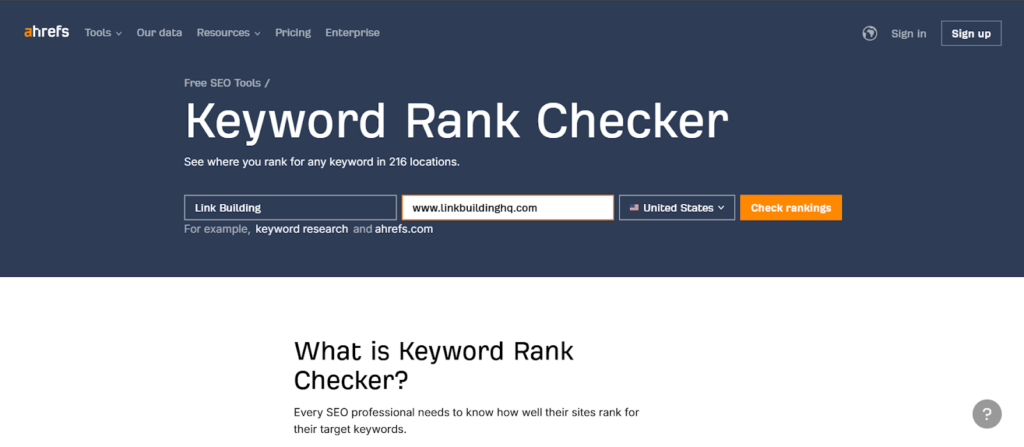
There are various tools available that can help you check your website’s SEO ranking, including Google Search Console, SEMrush, Ahrefs, and Moz. These tools provide valuable data on keyword rankings, backlinks, site health, and more.
When checking your website’s SEO ranking, pay attention to key metrics such as organic traffic, keyword positions, click-through rates (CTR), and backlink profile. These insights will help you understand how well your website is performing in search engines and what areas need improvement.
In Conclusion
Regularly monitoring and analysing your website’s SEO ranking is essential for maintaining a strong online presence and driving organic traffic to your site. By staying informed about where your website stands in search results, you can make informed decisions to improve its visibility and reach a wider audience.
Top 7 Benefits of Monitoring Your Website’s SEO Ranking
- Track performance of SEO efforts over time
- Identify opportunities to target new keywords
- Improve existing keyword strategies
- Enhance website’s search visibility
- Gain insights into competitor rankings
- Optimise user experience for better rankings
- Make data-driven decisions for SEO improvements
Challenges in Assessing Website SEO Ranking: Navigating Time, Data, and Competition
- 1. Time-Consuming
- 2. Data Overload
- 3. Fluctuating Rankings
- 4. Dependency on Tools
- 5. Competitive Pressure
- 6. Misinterpretation of Data
Track performance of SEO efforts over time
Tracking the performance of SEO efforts over time is a crucial advantage of regularly checking your website’s SEO ranking. By monitoring changes in ranking positions, businesses can gain valuable insights into the effectiveness of their SEO strategies. This allows them to assess the impact of various tactics, make data-driven decisions, and adapt their approach to continuously improve their search engine visibility and online presence.
Identify opportunities to target new keywords
By regularly checking your website’s SEO ranking, you can identify opportunities to target new keywords effectively. Understanding where your website currently stands in search engine results allows you to pinpoint relevant keywords that have the potential to improve your site’s visibility and attract more organic traffic. By analysing keyword trends and competitor rankings, you can develop a strategic approach to incorporate these new keywords into your content strategy, ultimately enhancing your website’s search engine optimisation and reaching a broader audience.
Improve existing keyword strategies
Regularly checking your website’s SEO ranking can significantly benefit your online presence by improving existing keyword strategies. By analysing where your website ranks for specific keywords, you can identify opportunities to enhance your keyword targeting and refine your content to better align with search intent. This proactive approach ensures that your website remains competitive in search engine results pages (SERPs) and helps drive more targeted organic traffic to your site.
Enhance website’s search visibility
Checking your website’s SEO ranking can significantly enhance your website’s search visibility. By monitoring where your site ranks in search engine results pages (SERPs), you can identify opportunities to improve your position for relevant keywords. This proactive approach allows you to optimise your website’s content, meta tags, and backlinks strategically, ultimately increasing the likelihood of attracting more organic traffic and reaching a broader audience online. Regularly tracking and improving your SEO ranking can help boost your website’s visibility and ensure that it remains competitive in the ever-evolving digital landscape.
Gain insights into competitor rankings
Checking your website’s SEO ranking provides the valuable benefit of gaining insights into competitor rankings. By monitoring where your competitors stand in search engine results pages (SERPs) for relevant keywords, you can identify competitive trends, benchmark your performance against industry rivals, and uncover opportunities to enhance your own SEO strategy. Understanding competitor rankings allows you to adapt and refine your approach to stay ahead in the digital landscape and improve your website’s visibility in search results.
Optimise user experience for better rankings
By regularly checking your website’s SEO ranking, you can optimise the user experience to achieve better rankings in search engine results. Understanding where your website stands in search rankings allows you to identify areas for improvement that can enhance user satisfaction. By focusing on factors such as site speed, relevant content, and mobile responsiveness, you can create a more user-friendly website that not only attracts visitors but also improves its visibility in search engines. Prioritising user experience through SEO ranking checks can lead to higher rankings and increased organic traffic, ultimately benefiting both users and your website’s performance.
Make data-driven decisions for SEO improvements
By regularly checking your website’s SEO ranking, you can make data-driven decisions for improving your site’s search engine optimisation. Analysing the data obtained from monitoring your ranking position allows you to identify trends, patterns, and areas of weakness that need attention. This insight empowers you to implement targeted strategies and adjustments based on concrete data, leading to more effective SEO improvements and ultimately enhancing your website’s visibility and performance in search results.
1. Time-Consuming
Checking website SEO ranking can be a time-consuming process, particularly when monitoring multiple keywords and competitors. The need to regularly track and analyse rankings for various search terms and keep an eye on competitor performance can demand a significant amount of time and effort. This time investment can be a drawback for businesses with limited resources or those looking to focus on other aspects of their digital marketing strategy. Balancing the benefits of monitoring SEO ranking with the time required for this task is crucial in ensuring an efficient and effective SEO strategy.
2. Data Overload
One significant drawback of regularly checking your website’s SEO ranking is the potential for data overload. With the multitude of SEO tools at your disposal, it can be overwhelming to sift through the vast amount of data they provide. This abundance of information can make it challenging to interpret key insights accurately and take actionable steps to improve your website’s performance effectively. As a result, businesses may find themselves struggling to navigate through the data noise and focus on the most critical aspects of their SEO strategy.
3. Fluctuating Rankings
Fluctuating Rankings: One significant drawback of regularly checking your website’s SEO ranking is the issue of fluctuating rankings. Search engine algorithms are continually evolving, which can result in unpredictable shifts in rankings that may not accurately reflect the actual performance of your website. These fluctuations can be frustrating for website owners, as they make it challenging to gauge the effectiveness of their SEO strategies and may lead to inconsistent visibility in search results.
4. Dependency on Tools
Dependence on SEO ranking tools poses a significant drawback as it can lead to a reliance that may impede a comprehensive understanding of your website’s overall performance and user experience. While these tools are valuable for tracking rankings and identifying areas for improvement, solely relying on them may limit the ability to grasp the intricacies of user behaviour, content engagement, and site functionality. A balanced approach that combines tool-generated data with qualitative analysis is essential to gain a holistic view of your website’s effectiveness and make informed decisions for enhancing its online presence.
5. Competitive Pressure
Constantly checking SEO rankings can introduce a significant con in the form of competitive pressure. The relentless pursuit of higher positions in search engine results can create unnecessary stress and anxiety for website owners. The competitive nature of SEO rankings often fuels a sense of urgency to outperform rivals, leading to a constant need to monitor and improve rankings. This pressure can detract from the overall focus on creating valuable content and delivering an exceptional user experience, potentially hindering long-term growth and sustainability.
6. Misinterpretation of Data
Misinterpretation of data is a significant drawback when checking website SEO ranking. Without the necessary knowledge or expertise in SEO analytics, there is a high risk of misinterpreting the data presented in ranking reports. This misinterpretation can result in ineffective decision-making regarding SEO strategies and actions to improve website performance. It is crucial to have a solid understanding of SEO metrics and analytics to make informed decisions based on accurate data rather than relying solely on ranking reports.