
Site Keyword Analysis: A Practical Guide to Finding the Right Keywords
Site keyword analysis is the process of researching and organising the search terms people use to find information, products or services like yours. It helps you understand what your audience is looking for and how your website can meet that need.
When done well, keyword analysis gives your website a clearer structure, helps shape useful content and supports stronger visibility in search results. It is not simply a matter of adding popular phrases to a page. The aim is to connect relevant search terms with pages that provide the most helpful answer.
Why site keyword analysis matters
Search engines aim to show people pages that are relevant to their query and satisfy their intent. Keyword analysis can help you:
- Understand the questions and needs of your potential customers.
- Identify topics your website should cover.
- Improve existing pages by making their purpose clearer.
- Find gaps in your content compared with competing websites.
- Reduce overlap between pages targeting similar searches.
- Prioritise opportunities that are realistic and valuable to your business.
It can also reveal how people describe a problem or service in their own words. That insight can inform not only your website content, but also your product descriptions, FAQs and broader marketing.
Start with your website and audience
Before using keyword research tools, make a list of the subjects your website needs to address. Consider your products or services, the problems they solve and the questions customers commonly ask.
Think about your audience’s journey. Someone who is just learning about a problem may use broad, information-focused searches. Someone comparing providers may look for specific features, pricing or reviews. A person ready to act may search for a service in a particular location or use terms such as “book”, “buy” or “contact”.
These differences matter because the same topic can lead to several distinct types of search. A page that explains a subject may not satisfy someone who is ready to purchase, and a sales page may not be the best response to an early research query.
Build a list of relevant keywords
Keyword research tools can suggest search terms, related topics and estimated search volumes. Useful sources may include search engine keyword tools, website analytics, search results, customer enquiries and your internal site search.
Begin with a few core topics, then expand each one into related searches. For example, a topic might lead to queries about benefits, costs, comparisons, common problems and how-to advice. Include both broad terms and more specific phrases. Longer, more detailed searches often reveal clearer intent, even if they attract fewer searches.
Do not treat tool estimates as exact figures. Search volumes and difficulty scores are approximations, and they do not guarantee traffic or rankings. Use them as clues alongside your knowledge of customers and the purpose of your website.
Understand search intent
Search intent is the reason behind a query. Understanding it helps you choose the right page format and decide whether a keyword is a good fit for your website.
- Informational: The searcher wants an explanation, answer or guide.
- Navigational: The searcher is looking for a particular website or brand.
- Commercial research: The searcher is comparing options before making a decision.
- Transactional: The searcher is ready to take an action, such as buying or making an enquiry.
Review the current search results for an important keyword. Look at the types of pages appearing, the questions they answer and the level of detail they provide. This offers a useful indication of what search engines consider relevant for that query. It is a guide, not a reason to copy competing pages.
Group keywords into topics
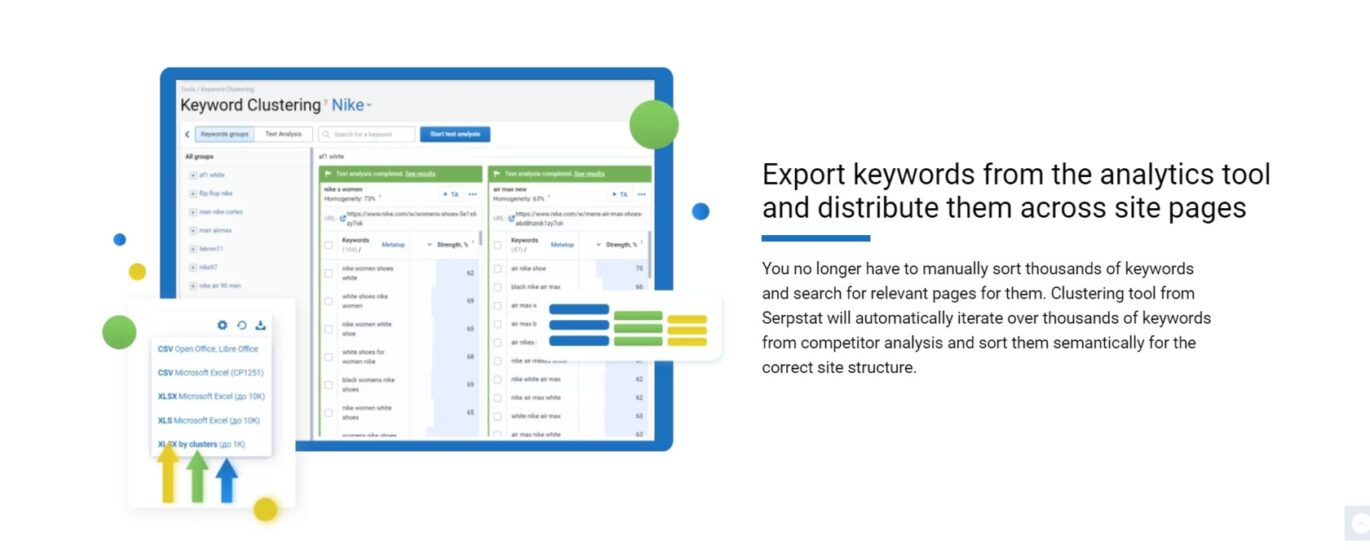
Once you have a keyword list, group related terms by subject and intent. A group might include a main phrase, close variations and related questions that can be answered on the same page.
This approach helps you create a useful content plan rather than a long, disconnected list of keywords. It also makes it easier to identify whether a subject needs one comprehensive page or several pages addressing different needs.
For instance, a broad service topic might require a main service page, while separate articles could explain how the service works, compare approaches or answer common questions. The pages should have distinct purposes and link to one another where that helps readers.
Map keywords to the right pages
Keyword mapping means assigning each topic or keyword group to the most suitable page on your website. A simple spreadsheet can record:
- The target page or proposed page.
- The main keyword or topic.
- Related terms and questions.
- Search intent.
- The page’s purpose and intended audience.
- Its current performance and any planned improvements.
In most cases, one page should have a clear primary focus, supported by naturally related terms. Avoid creating a separate page for every minor wording variation. If two pages serve the same purpose and target essentially the same search, consider whether they should be combined or clearly differentiated.
Use keywords naturally in useful content
Once keywords are mapped, use them to guide the content rather than dictate every sentence. Include the main topic where it makes sense, such as in the page title, main heading and introductory text. Use related terms when they help explain the subject clearly.
There is no need to repeat a phrase unnaturally or force every variation into a page. Keyword stuffing can make content difficult to read and does not create a better experience. Focus on answering the visitor’s questions with accurate, well-organised information.
Pay attention to the page’s title tag, headings, URL, internal links and image descriptions where relevant. These elements can help communicate the page’s subject, but they should remain clear and useful to people as well as search engines.
Check for keyword cannibalisation
Keyword cannibalisation can occur when several pages on the same website compete for similar searches. It may make it harder for search engines to understand which page is the most relevant, and it can divide links, engagement and other signals between pages.
Not every instance of two pages appearing for related terms is a problem. Review the pages’ purpose, content and search performance before making changes. If they overlap heavily, you might combine them, improve the distinction between them or adjust the internal links and page focus.
Review and refine your analysis
Site keyword analysis is not a one-off task. Search behaviour, competitors, services and website content change over time. After publishing or updating pages, review their performance using suitable analytics and search reporting tools.
Look at impressions, clicks, search queries, rankings and meaningful actions such as enquiries or sales. A page may attract visits without reaching the right audience, so traffic alone is not always a measure of success. Use the results to identify content that needs improvement, new questions to address and opportunities to strengthen internal linking.
Common mistakes to avoid
- Choosing keywords based only on high search volume.
- Ignoring what the searcher is trying to achieve.
- Targeting terms that are not relevant to your organisation or audience.
- Creating thin pages for small variations of the same phrase.
- Repeating keywords so often that the writing sounds unnatural.
- Assuming a keyword tool’s difficulty score guarantees an outcome.
- Publishing content without checking whether a suitable page already exists.
- Failing to review results and update the keyword map.
Make keyword analysis part of your content strategy
Effective site keyword analysis connects audience research, page planning and ongoing measurement. It helps you decide what to publish, what to improve and how each page can serve a distinct purpose.
Start with your audience’s needs, organise related searches by intent and map them to relevant pages. Then create clear, helpful content and review how it performs. This considered approach is more sustainable than chasing individual keywords, and it gives visitors a better chance of finding the information they need.
7 Benefits of Website Keyword Analysis
- Reveals what your audience is searching for.
- Helps you create more relevant content.
- Improves your website’s search visibility.
- Matches pages to search intent.
- Highlights content gaps and opportunities.
- Reduces overlap between competing pages.
- Helps prioritise valuable SEO work.
Drawbacks of Website Keyword Analysis
- Can be time-consuming to research and maintain.
- Search volume and difficulty estimates may be inaccurate.
- Popular keywords can be highly competitive.
- Poor analysis can lead to irrelevant or repetitive content.
Reveals what your audience is searching for.
Site keyword analysis reveals what your audience is searching for, including the questions they ask, the problems they want to solve and the language they use. These insights help you create relevant website content, focus on topics that matter to potential customers and make it easier for them to find the information, products or services they need.
Helps you create more relevant content.
Site keyword analysis helps you create more relevant content by revealing the questions, needs and language your audience uses when searching online. With these insights, you can shape pages and articles around topics that matter to potential customers, answer their questions more directly and make your website more useful to the people you want to reach.
Improves your website’s search visibility.
Site keyword analysis can improve your website’s search visibility by showing which terms your audience uses when looking for your products, services or information. By matching relevant keywords to helpful, well-structured pages, you make it easier for search engines to understand your content and show it to people making relevant searches.
Matches pages to search intent.
Site keyword analysis helps match each page to the intent behind a search. By understanding whether visitors are looking for information, comparing options or ready to take action, you can create or refine pages that meet their needs. This makes your content more relevant, improves the visitor experience and gives search engines clearer signals about when a page is a suitable result.
Highlights content gaps and opportunities.
Site keyword analysis can reveal content gaps by showing which questions, topics and search terms your website does not yet address. Comparing these opportunities with your existing pages helps you identify useful new articles, guides or service pages that could better meet your audience’s needs. It can also highlight subjects where competitors are attracting attention, giving you a chance to create clearer, more comprehensive and relevant content.
Reduces overlap between competing pages.
Site keyword analysis helps reduce overlap between competing pages by clarifying the purpose and target topic of each page. When related search terms are mapped to the most suitable page, there is less risk of several pages competing for the same queries or confusing visitors about where to find information. This makes the site easier to navigate and helps search engines identify the page that best answers each search.
Helps prioritise valuable SEO work.
Site keyword analysis helps prioritise SEO work by showing which search opportunities are most relevant to your audience and business goals. By comparing factors such as search intent, potential value, competition and the performance of existing pages, you can focus time and resources on improvements likely to make a meaningful difference, rather than spreading effort across low-impact keywords.
Can be time-consuming to research and maintain.
One drawback of site keyword analysis is that it can take considerable time to research and maintain. Finding relevant search terms, assessing their intent, grouping them and matching them to the right pages requires careful work. The analysis also needs regular updates as audience behaviour, search trends and your website change. Without ongoing review, your keyword plan can quickly become outdated, so it is important to balance the effort involved with the value each opportunity may bring.
Search volume and difficulty estimates may be inaccurate.
Search volume and keyword difficulty figures are estimates, not guarantees, and can vary between tools or change as search behaviour evolves. They may not reflect the true level of demand, competition or commercial value for a particular search, so relying on them too heavily can lead to poor priorities. Treat these metrics as useful indicators, then weigh them against search intent, your audience’s needs and your own website data.
Popular keywords can be highly competitive.
Popular keywords can be highly competitive, with established websites often dominating the search results. For a newer or smaller site, it may take considerable time and effort to rank for these terms, and there is no guarantee of success. Focusing only on high-volume keywords can therefore lead to wasted resources; it is often more practical to target specific, relevant phrases where competition is lower and search intent is clearer.
Poor analysis can lead to irrelevant or repetitive content.
Poor site keyword analysis can lead to content that misses the mark. If keywords are chosen without considering what visitors actually want, pages may attract the wrong audience or fail to answer their questions. Targeting very similar terms across multiple pages can also result in repetitive content, making a website feel padded and offering little new value to readers. Keywords should therefore guide useful, distinct content rather than dictate it.