
Keyword Competitor Analysis: A Practical Guide to Finding SEO Opportunities
Keyword competitor analysis helps you understand which search terms other websites are targeting—and where your own website could perform better. By studying competitors’ rankings, content and search visibility, you can find relevant opportunities, plan useful pages and make more informed decisions about your SEO strategy.
It is not about copying another website. The aim is to learn what is working in your market, identify gaps and create content that serves searchers more effectively.
What Is Keyword Competitor Analysis?
Keyword competitor analysis is the process of researching the search terms for which competing websites appear in search engine results. It can reveal:
- Keywords that bring potential customers to competing websites
- Topics and questions your audience is searching for
- Search terms your website ranks for, and where competitors rank higher
- Content gaps that may be worth addressing
- Commercial keywords that could support enquiries or sales
A competitor does not have to sell the same products or services as you. For SEO research, a competitor is any website that regularly appears in search results for the topics and keywords you want to target. This might include publishers, directories, comparison sites or businesses in a neighbouring sector.
Why Is Keyword Competitor Analysis Important?
Choosing keywords based only on assumptions can lead to content that attracts little traffic or reaches the wrong audience. Competitor research adds useful context. It shows how people search in your market and what types of pages are already visible in the results.
It can help you:
- Spot missed opportunities: Find relevant keywords that your website has not yet targeted.
- Improve existing pages: Identify topics, subheadings or questions that competing pages cover well.
- Understand search intent: See whether searchers expect a guide, product page, service page, comparison or another format.
- Prioritise your work: Compare potential opportunities by relevance, difficulty and business value.
- Build a stronger content plan: Group related keywords into topics and plan pages that answer people’s needs.
How to Carry Out Keyword Competitor Analysis
Identify your search competitors
Start with a shortlist of businesses you consider to be competitors, then check the search results for your main products, services and topics. Note which websites appear repeatedly. These are likely to be your most useful SEO competitors, even if they are not direct commercial rivals.
It is often helpful to compare a few different types of website: direct competitors, specialist publishers and large directories. Each may reveal different keyword opportunities.
Gather competitor keyword data
SEO platforms can estimate the keywords a website ranks for, its ranking positions and the pages receiving search visibility. Google Search results can also provide a useful manual check: search for important phrases and review the pages that appear.
When collecting data, record the keyword, the ranking page, the estimated search demand and the competitor’s position. Treat third-party metrics as estimates rather than exact figures. Search results and rankings can change, so use the data to guide research—not as a guarantee of future performance.
Look for keywords you do not target
Compare competitor keywords with the terms your website already targets. Look for relevant phrases where competitors appear but your site does not. These are sometimes called keyword gaps.
A gap is not automatically an opportunity. Check that the term is relevant to your audience and business, and that you can create a genuinely useful page for it. A high-volume keyword with little connection to your offering may be less valuable than a more specific search term with clear intent.
Assess search intent
Before deciding to target a keyword, examine the current search results. The pages shown can indicate what searchers are looking for.
- Informational intent: The searcher wants an explanation, guide or answer.
- Commercial investigation: The searcher is comparing options before making a decision.
- Transactional intent: The searcher is ready to buy, book or request a service.
- Navigational intent: The searcher is looking for a particular organisation or website.
For example, a broad search may return educational articles, while a more specific phrase may return service pages or product listings. A useful page should match the intent suggested by the results.
Review the pages that rank
Study the competitor pages that appear for your priority keywords. Consider what they explain, how clearly they structure the information and whether they address common questions. Look for areas where your page could be more complete, easier to understand or more useful.
Do not simply copy their headings or wording. Competitor pages are research material, not a template. Your content should reflect your own expertise, offer original value and give readers a clear reason to choose your business.
Group keywords into topics
Many related search terms can be addressed by one well-planned page. Group keywords according to their subject and intent, then decide whether each group belongs on an existing page or deserves a new one.
This helps prevent multiple pages from competing for the same search terms. It also makes your website easier to navigate, with clear pages for distinct audience needs.
Prioritise the opportunities
Assess each potential keyword against practical criteria, such as:
- How closely it relates to your products, services or expertise
- Whether the search intent matches the page you can provide
- Its estimated search demand
- The strength and type of pages currently ranking
- The potential value of attracting that audience
- The time and resources needed to create or improve the page
It is usually better to prioritise a small set of relevant opportunities than to publish large numbers of pages targeting loosely related terms.
Useful Tools for Keyword Competitor Analysis
A combination of tools and manual research can provide a more rounded view. Options include:
- Google Search Console: Shows the queries that already bring impressions and clicks to your website.
- Keyword research platforms: Many SEO tools provide competitor keyword estimates, ranking comparisons and gap reports.
- Search engine results pages: Manual searches help you inspect ranking pages, formats and intent directly.
- Website analytics: Analytics data can help you understand what visitors do after arriving on your site.
Tool features, data sources and estimates vary. Use more than one source where possible, and validate promising ideas by reviewing the actual search results.
Common Keyword Competitor Analysis Mistakes
- Choosing competitors by reputation alone: The websites you compete with in search may differ from your business rivals.
- Chasing search volume: High-volume phrases may be too broad, too competitive or poorly matched to your offering.
- Ignoring intent: A keyword is only useful when the page you create meets the searcher’s needs.
- Copying competitor content: Reproducing another site’s approach will not give readers a distinct reason to visit your page.
- Taking estimates as facts: Search volume and ranking data from SEO tools are approximate.
- Forgetting your own strengths: Your experience, services and customer knowledge can reveal opportunities competitors have overlooked.
Turning Analysis into an SEO Plan
Keyword competitor analysis is most useful when it leads to clear actions. Create a simple plan that lists each target topic, the intended page, the search intent, the competing pages and the improvements required. You can then decide whether to update an existing page, create a new resource or leave the keyword aside.
After publishing or improving content, monitor impressions, clicks, rankings and relevant business outcomes. Review the analysis periodically, as competitors update their pages and search behaviour changes. The goal is not to rank for every keyword a competitor targets; it is to build a focused collection of useful pages that supports your audience and your business.
Make Competitor Research Work for Your Website
A thoughtful keyword competitor analysis can reveal where your website has room to grow. By identifying the right search competitors, checking keyword gaps, assessing intent and prioritising relevant opportunities, you can create a more effective SEO content plan.
Use competitor data as a starting point, then bring your own expertise to the work. The strongest pages do more than target a phrase: they answer the reader’s question clearly and provide information worth returning to.
Essential FAQs on Keyword Competitor Analysis for Effective SEO Strategy
- What is keyword competitor analysis?
- Why is keyword competitor analysis important for SEO?
- How do I identify my SEO competitors?
- How can I find the keywords my competitors rank for?
- Which tools can I use for keyword competitor analysis?
- How do I find keyword gaps between my website and competitors?
- How do I prioritise keywords found through competitor analysis?
- How often should I carry out keyword competitor analysis?
What is keyword competitor analysis?
Keyword competitor analysis is the process of researching the search terms that competing websites rank for, then comparing them with the keywords your own website targets. It helps you discover relevant search opportunities, understand what people are looking for and identify ways to improve or create content. The aim is not to copy competitors, but to use the findings to build a more useful and focused SEO strategy.
Why is keyword competitor analysis important for SEO?
Keyword competitor analysis is important for SEO because it shows which search terms help competing websites reach your audience and highlights opportunities your own site may be missing. By comparing rankings, content and search intent, you can prioritise relevant keywords, improve existing pages and create useful content that better meets searchers’ needs. It also helps you make informed decisions about where to focus your SEO efforts, rather than relying on guesswork.
How do I identify my SEO competitors?
Identify your SEO competitors by searching Google for the main keywords you want to rank for and noting which websites appear consistently in the results. These may not be your direct business rivals: publishers, directories and comparison sites can also compete for the same search traffic. SEO tools can help you compare websites’ rankings and keywords, but check the search results yourself to make sure the sites are relevant to your audience and goals.
How can I find the keywords my competitors rank for?
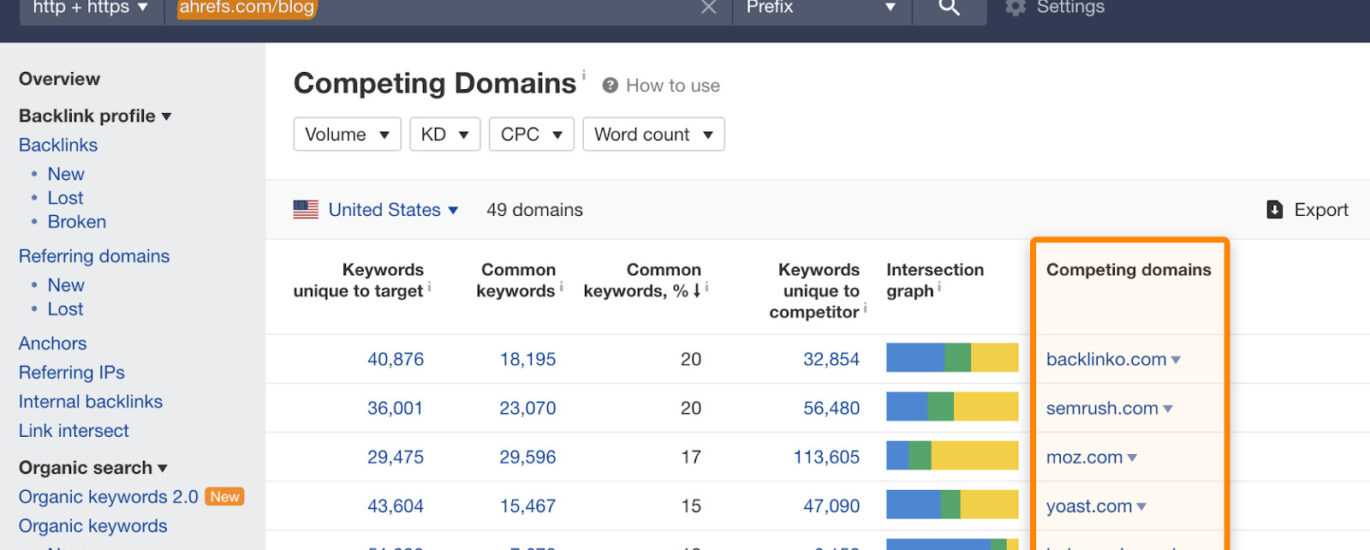
You can find the keywords your competitors rank for by entering their website addresses into an SEO research tool, such as Ahrefs, Semrush or Moz, and reviewing their organic keyword reports. Compare several genuine search competitors to identify shared keywords and gaps, then check promising terms in Google to see which pages rank and what search intent they serve. Treat tool data as estimates, and use Google Search Console to compare those findings with the queries already bringing visitors to your own website.
Which tools can I use for keyword competitor analysis?
You can use SEO platforms such as Semrush, Ahrefs, Moz or SE Ranking to compare competitors’ rankings, discover keyword gaps and review estimated search volumes. Google Search Console is useful for checking the queries your own website already attracts, while Google Keyword Planner can help with keyword ideas and demand estimates. It’s also worth reviewing search results manually to understand the pages and search intent behind each keyword. Tool data is indicative, so use it alongside your knowledge of your audience and business.
How do I find keyword gaps between my website and competitors?
To find keyword gaps, compare the search terms your website ranks for with those bringing visibility to relevant search competitors. Use an SEO research tool to enter your domain alongside competitors’ domains and review terms they rank for that your site does not, or where your pages rank lower. Then check each opportunity against the search results to confirm it is relevant to your audience and that you can create a page matching the search intent. Treat tool data as estimates, and prioritise useful, achievable keywords over simply choosing those with the highest search volume.
How do I prioritise keywords found through competitor analysis?
Prioritise competitor keywords by how closely they match your products, services and audience, then consider search intent, potential business value, search demand and how competitive the results are. Give preference to terms for which you can create a genuinely useful page that fits what searchers are looking for. A relevant, specific keyword with clear commercial intent may be more valuable than a high-volume but broad phrase. Use SEO tool metrics as estimates, and check the actual search results before deciding what to target.
How often should I carry out keyword competitor analysis?
Carry out keyword competitor analysis every three to six months as a general guide, and whenever you launch a new product, enter a new market or update your SEO strategy. Check more often in fast-moving industries or after significant changes to search rankings. Regular reviews help you spot new opportunities and competitor activity, while avoiding unnecessary day-to-day changes based on short-term fluctuations.