
The Theory of Disruptive Innovation by Clayton Christensen
Clayton Christensen, a renowned professor at Harvard Business School, introduced the concept of disruptive innovation in his seminal work. This theory has since become a cornerstone in understanding how new technologies and business models disrupt existing markets.
What is Disruptive Innovation?
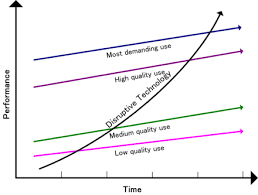
Disruptive innovation refers to the process by which a smaller company with limited resources introduces a product or service that initially targets low-end or niche segments of the market. Over time, this innovation evolves and eventually displaces established competitors in the market.
Key Characteristics of Disruptive Innovations
- Targeting Underserved Markets: Disruptive innovations often start by addressing the needs of customers that are overlooked or underserved by existing solutions.
- Simplicity and Affordability: These innovations are typically simpler, more affordable, and easier to use than traditional offerings.
- Rapid Iteration and Improvement: Companies behind disruptive innovations continuously iterate and improve their products based on customer feedback and market demands.
- Market Expansion: Disruptive innovations gradually expand their market reach, eventually challenging established players in the industry.
Examples of Disruptive Innovations
A classic example of disruptive innovation is the introduction of digital cameras, which initially targeted amateur photographers with lower quality but more convenient solutions compared to traditional film cameras. Over time, digital photography disrupted the entire photography industry.
The Impact of Disruptive Innovation
Disruptive innovation can have far-reaching implications for businesses across various sectors. Companies that fail to adapt to changing market dynamics driven by disruptive technologies risk being left behind. On the other hand, embracing disruptive innovation can open up new opportunities for growth and competitive advantage.
In Conclusion
Clayton Christensen’s theory of disruptive innovation provides valuable insights into how new technologies and business models can reshape industries. By understanding the principles behind disruptive innovation, businesses can better position themselves to thrive in an ever-evolving marketplace.
Five Essential Tips for Embracing Christensen’s Disruptive Innovation
- Focus on creating new markets rather than competing in existing ones.
- Be willing to challenge the status quo and take risks.
- Stay alert to emerging technologies and trends that could disrupt your industry.
- Encourage a culture of experimentation and learning from failures.
- Continuously adapt and evolve your business model to stay ahead of disruptive forces.
Focus on creating new markets rather than competing in existing ones.
In the realm of disruptive innovation, one key tip advocated by Clayton Christensen is to shift focus towards creating new markets rather than engaging in direct competition within existing ones. By identifying underserved or unexplored market segments and introducing innovative solutions tailored to their specific needs, companies can carve out a unique space for themselves and establish a strong foothold in the industry. This proactive approach not only mitigates the risk of being overshadowed by established competitors but also opens up opportunities for growth and differentiation through pioneering new avenues of value creation.
Be willing to challenge the status quo and take risks.
To successfully leverage Christensen’s theory of disruptive innovation, it is crucial to embody a mindset that embraces challenging the status quo and taking calculated risks. By being willing to question established norms and explore unconventional approaches, businesses can uncover new opportunities for growth and innovation. Embracing risk-taking allows organisations to push boundaries, experiment with novel ideas, and adapt to changing market dynamics, ultimately positioning them for long-term success in an increasingly competitive landscape shaped by disruptive technologies.
Stay alert to emerging technologies and trends that could disrupt your industry.
Staying alert to emerging technologies and trends that have the potential to disrupt your industry is crucial in today’s rapidly evolving business landscape. By actively monitoring and analysing new developments, businesses can proactively identify opportunities and threats posed by disruptive innovations. Embracing a forward-thinking approach allows organisations to adapt their strategies, processes, and offerings to stay competitive and seize the advantages presented by emerging technologies. Being vigilant and responsive to industry disruptions enables companies to navigate change effectively and position themselves for sustainable growth in the face of evolving market dynamics.
Encourage a culture of experimentation and learning from failures.
Encouraging a culture of experimentation and learning from failures is crucial in embracing Clayton Christensen’s theory of disruptive innovation. By fostering an environment where taking risks and trying new ideas are encouraged, businesses can uncover innovative solutions that have the potential to disrupt existing markets. Embracing failure as a learning opportunity allows teams to iterate, refine, and ultimately develop breakthrough innovations that can propel the organisation forward. This culture of experimentation not only fosters creativity but also builds resilience and adaptability within the company, enabling it to stay ahead in a rapidly changing business landscape.
Continuously adapt and evolve your business model to stay ahead of disruptive forces.
To stay ahead of disruptive forces, it is crucial for businesses to continuously adapt and evolve their business models. By embracing change and proactively adjusting strategies to align with emerging trends and technologies, companies can position themselves as innovators rather than victims of disruption. This proactive approach not only enables businesses to anticipate market shifts but also fosters a culture of agility and resilience that is essential for long-term success in today’s rapidly changing business landscape.