
The Transformative Power of AI and Machine Learning
Artificial Intelligence (AI) and Machine Learning (ML) are two of the most transformative technologies of our time. They are reshaping industries, driving innovation, and providing new solutions to complex problems. This article explores the impact of AI and ML, their applications, and what the future holds for these groundbreaking technologies.
Understanding AI and ML
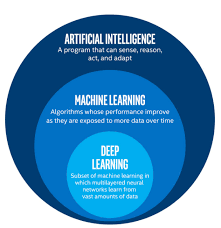
AI refers to the simulation of human intelligence in machines that are programmed to think like humans and mimic their actions. It encompasses a range of capabilities, from natural language processing to visual perception. Machine Learning, a subset of AI, involves training algorithms on data so they can learn patterns and make decisions with minimal human intervention.
Applications Across Industries
The applications of AI and ML span numerous industries:
- Healthcare: AI-driven diagnostics can analyse medical images with remarkable accuracy, while predictive analytics help in disease prevention.
- Finance: Algorithms detect fraudulent activities in real-time and automate trading processes for better investment strategies.
- Retail: Personalised recommendations enhance customer experience, while inventory management is optimised through demand forecasting.
- Manufacturing: Predictive maintenance reduces downtime by anticipating equipment failures before they occur.
The Benefits of AI and ML
The adoption of AI and ML brings numerous benefits to businesses:
- Efficiency: Automating routine tasks allows companies to focus on strategic initiatives.
- Accuracy: Data-driven insights lead to more informed decision-making processes.
- Innovation: New products and services emerge as companies harness advanced analytics capabilities.
The Challenges Ahead
Despite their potential, AI and ML also present challenges. Concerns about privacy, ethical considerations in decision-making algorithms, and the need for transparent models are paramount. Additionally, there is a growing demand for skilled professionals who can develop and manage these technologies effectively.
The Future of AI and ML
The future looks promising as AI continues to evolve. We can expect more sophisticated algorithms that improve over time with increased data availability. The integration of AI into everyday life will become even more seamless, offering unprecedented convenience while raising new ethical questions about its role in society.
Conclusion
The transformative power of AI and Machine Learning cannot be overstated. As these technologies advance further, they will continue to revolutionise industries across the globe. By addressing current challenges responsibly, we can harness their full potential for a brighter future.
Mastering AI and ML: 7 Essential Tips for Success
- Understand the basics of AI and ML concepts before diving into advanced topics.
- Stay updated with the latest trends and advancements in AI and ML technology.
- Experiment with different algorithms to see which ones work best for your specific use case.
- Ensure your data is clean, relevant, and sufficient for training your AI models effectively.
- Consider ethical implications when developing AI systems to ensure fairness and transparency.
- Collaborate with experts in the field to gain insights and improve your AI projects.
- Regularly evaluate the performance of your AI models and make necessary adjustments for optimal results.
Understand the basics of AI and ML concepts before diving into advanced topics.
Before delving into advanced topics in Artificial Intelligence (AI) and Machine Learning (ML), it is crucial to grasp the fundamental concepts. Understanding the basics provides a solid foundation that makes complex theories and applications more comprehensible. Key concepts such as algorithms, data processing, model training, and evaluation are essential building blocks for further exploration. A firm grasp of these fundamentals not only aids in better comprehension of sophisticated techniques but also enhances one’s ability to apply AI and ML effectively in practical scenarios. Starting with the basics ensures a smoother learning curve and prepares one for the challenges of more advanced study and implementation.
Stay updated with the latest trends and advancements in AI and ML technology.
Staying updated with the latest trends and advancements in AI and ML technology is crucial for anyone involved in the field, whether they are developers, business leaders, or enthusiasts. The rapid pace of innovation means that new tools, techniques, and applications are constantly emerging, which can significantly enhance capabilities and efficiencies. By keeping abreast of these developments through industry publications, online courses, webinars, and conferences, individuals and organisations can maintain a competitive edge. This proactive approach not only helps in adopting cutting-edge solutions but also ensures that one remains informed about ethical considerations and best practices in this ever-evolving landscape.
Experiment with different algorithms to see which ones work best for your specific use case.
When working with AI and machine learning, experimenting with different algorithms is crucial to identifying the most suitable solution for a specific use case. Each algorithm has its strengths and weaknesses, and its effectiveness can vary depending on the nature of the data and the problem at hand. By testing multiple algorithms, one can gain insights into which approach yields the best performance metrics, such as accuracy or efficiency. This iterative process not only enhances the model’s predictive capabilities but also provides a deeper understanding of the underlying data patterns. Ultimately, experimenting with various algorithms ensures that the chosen model aligns well with business objectives and delivers optimal results.
Ensure your data is clean, relevant, and sufficient for training your AI models effectively.
Ensuring that your data is clean, relevant, and sufficient is crucial for the effective training of AI models. Clean data, free from errors and inconsistencies, provides a solid foundation for accurate model predictions. Relevance ensures that the data aligns with the specific problem or task the AI model aims to solve, enhancing its ability to learn meaningful patterns. Furthermore, having a sufficient amount of data is essential to avoid overfitting and to enable the model to generalise well across different scenarios. By prioritising these aspects of data preparation, businesses can significantly improve the performance and reliability of their AI and machine learning models.
Consider ethical implications when developing AI systems to ensure fairness and transparency.
When developing AI systems, it is crucial to consider the ethical implications to ensure fairness and transparency. As AI technologies increasingly influence decision-making processes across various sectors, they must be designed with a strong ethical framework. This involves addressing potential biases in algorithms, ensuring that data used for training is representative and diverse, and being transparent about how decisions are made by AI systems. By prioritising these ethical considerations, developers can build trust with users and stakeholders, ultimately leading to more equitable outcomes and fostering public confidence in AI technologies.
Collaborate with experts in the field to gain insights and improve your AI projects.
Collaborating with experts in the field of AI and Machine Learning can significantly enhance the quality and success of your projects. These specialists bring a wealth of knowledge and experience, offering valuable insights into the latest trends, technologies, and methodologies. By engaging with them, you can gain a deeper understanding of complex concepts, avoid common pitfalls, and discover innovative solutions to challenges. Furthermore, expert collaboration fosters an environment of continuous learning and improvement, ensuring that your AI initiatives remain at the cutting edge. This partnership not only boosts the technical prowess of your team but also accelerates project timelines and improves overall outcomes.
Regularly evaluate the performance of your AI models and make necessary adjustments for optimal results.
Regularly evaluating the performance of AI models is crucial to ensuring they deliver optimal results. Over time, the data landscape can change, leading to shifts in patterns and trends that the model must adapt to. By consistently monitoring key performance metrics, such as accuracy, precision, and recall, one can identify any decline in effectiveness and make necessary adjustments. This might involve retraining the model with updated data sets, fine-tuning hyperparameters, or even selecting a different algorithm better suited to current conditions. Regular evaluation not only maintains the model’s relevance but also enhances its ability to provide accurate insights and predictions in a dynamic environment.