
Clayton Christensen and Disruptive Innovation
Clayton Christensen, an esteemed professor at Harvard Business School, is renowned for his groundbreaking theory of disruptive innovation. His research and insights have transformed the way we understand how new technologies and business models disrupt established industries.
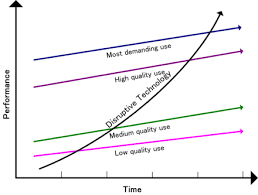
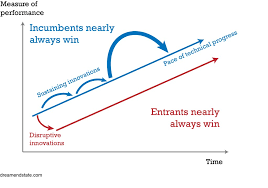
Christensen’s theory posits that disruptive innovation occurs when a smaller company with fewer resources challenges established market leaders by introducing simpler, more affordable products or services that initially cater to low-end or niche markets. Over time, these innovations improve and eventually overtake existing market players.
One of the key aspects of Christensen’s theory is the distinction between sustaining innovation, which involves incremental improvements to existing products or services, and disruptive innovation, which fundamentally changes the competitive landscape by creating new markets or reshaping existing ones.
Through his extensive research and case studies, Christensen has demonstrated how companies that fail to adapt to disruptive innovations risk being left behind as newer, more agile competitors capture market share. He emphasises the importance of not only recognising disruptive threats but also proactively responding to them through strategic planning and innovation.
Christensen’s work has had a profound impact on businesses across various industries, prompting leaders to rethink their approaches to innovation and competition. By understanding the principles of disruptive innovation outlined by Clayton Christensen, companies can better position themselves to navigate an increasingly dynamic and competitive business environment.
Understanding Disruptive Innovation: Insights from Clayton Christensen’s Theory
- Who is the father of disruptive innovation?
- What is an example of disruptive innovation?
- Who is the father of disruptive innovation theory?
- Who started disruptive innovation?
- What are the 4 stages of disruptive innovation?
- What is disruptive innovation according to Christensen?
- What is the Clayton Christensen concept?
- Is Christensen’s theory of disruptive innovation still relevant?
- What is an example of a disruptive innovation model?
Who is the father of disruptive innovation?
The term “father of disruptive innovation” is often attributed to Clayton Christensen, a prominent figure in the field of business and innovation. Christensen’s extensive research and groundbreaking theory on disruptive innovation have significantly influenced how we perceive and understand the dynamics of technological change and market disruption. His work has shaped the way businesses approach innovation and competition, making him a central figure in discussions surrounding disruptive innovation.
What is an example of disruptive innovation?
An example of disruptive innovation can be seen in the transformation of the music industry with the introduction of digital music streaming services like Spotify. Traditional music distribution methods, such as physical CDs and downloads, were disrupted by the convenience and accessibility offered by streaming platforms. Initially targeting niche markets with lower-quality audio and limited song libraries, these services gradually improved their offerings to compete directly with established music retailers. As a result, consumers shifted towards the more affordable and flexible streaming model, leading to a significant disruption in how music is consumed and distributed. This example illustrates how disruptive innovation can reshape entire industries by challenging existing norms and creating new opportunities for growth.
Who is the father of disruptive innovation theory?
The term “father of disruptive innovation theory” is often attributed to Clayton Christensen, the renowned Harvard Business School professor whose groundbreaking research and insights have shaped our understanding of how new technologies and business models disrupt established industries. Christensen’s seminal work on disruptive innovation has had a profound impact on the business world, prompting leaders to rethink their strategies in the face of evolving markets and technologies. His contributions have solidified his reputation as a pioneer in the field of innovation theory, earning him the title of the father of disruptive innovation theory.
Who started disruptive innovation?
The concept of disruptive innovation was popularised by Clayton Christensen, a prominent professor at Harvard Business School. While Christensen is credited with coining the term and developing the theory of disruptive innovation in his influential book “The Innovator’s Dilemma,” it is important to note that the concept itself has roots in earlier works on innovation and competitive strategy. Christensen’s research and insights have since become foundational in understanding how new technologies and business models can disrupt established industries, shaping the way businesses approach innovation and competition in today’s fast-paced market environments.
What are the 4 stages of disruptive innovation?
In the context of Clayton Christensen’s theory of disruptive innovation, the concept is often associated with four distinct stages that outline the process through which disruptive technologies or business models emerge and disrupt established industries. The first stage involves the introduction of a disruptive innovation in a niche market that is typically overlooked by incumbent companies. This is followed by the gradual improvement and refinement of the innovation to cater to broader customer segments in the second stage. The third stage sees the disruptive innovation gaining traction and capturing market share, often at the expense of traditional market leaders. Finally, in the fourth stage, the once-disruptive innovation becomes mainstream, reshaping the industry landscape and challenging established players to adapt or risk obsolescence.
What is disruptive innovation according to Christensen?
Disruptive innovation, as defined by Clayton Christensen, refers to the process by which smaller, often overlooked companies introduce simpler and more affordable products or services that initially target niche or low-end markets. These innovations gradually improve over time, eventually challenging and surpassing established market leaders. Christensen’s theory highlights the transformative power of disruptive technologies in reshaping industries and creating new market opportunities. By understanding disruptive innovation according to Christensen, businesses can adapt their strategies to navigate the changing competitive landscape and seize growth opportunities in evolving markets.
What is the Clayton Christensen concept?
The Clayton Christensen concept refers to the theory of disruptive innovation developed by renowned Harvard Business School professor Clayton Christensen. This concept highlights how smaller, innovative companies can disrupt established market leaders by introducing simpler, more affordable products or services that initially target niche or low-end markets. Over time, these disruptive innovations evolve and eventually challenge and overtake incumbent players in the industry. Christensen’s concept emphasises the importance of understanding the difference between sustaining innovation, which involves incremental improvements to existing products, and disruptive innovation, which fundamentally alters market dynamics. By embracing the Clayton Christensen concept, businesses can adapt to changing market conditions and position themselves for long-term success in a competitive landscape.
Is Christensen’s theory of disruptive innovation still relevant?
In assessing the relevance of Clayton Christensen’s theory of disruptive innovation, it is essential to consider the evolving nature of industries and markets in today’s fast-paced business landscape. While some critics argue that the concept may need refinement to account for contemporary technological advancements and changing consumer behaviours, many experts believe that the core principles of disruptive innovation remain valid. Christensen’s theory continues to offer valuable insights into how new entrants can disrupt established markets and how companies can adapt to stay competitive. As industries continue to experience rapid transformation and digital disruption, understanding and applying Christensen’s theory can provide a strategic framework for organisations seeking to innovate and thrive in an increasingly dynamic environment.
What is an example of a disruptive innovation model?
One notable example of a disruptive innovation model is the introduction of digital photography in the camera industry. Traditional film-based photography was the dominant technology for capturing images for many years. However, with the advent of digital cameras, which initially offered lower image quality but greater convenience and affordability, a shift began. Companies like Kodak, a leader in film photography, failed to recognise the disruptive potential of digital technology and suffered significant losses as newer digital camera manufacturers gained market share. This example illustrates how disruptive innovation can reshape industries by offering alternative solutions that eventually surpass established technologies.