
The Power of Analytical Tools in Research
Research is the backbone of progress and innovation in every field, from science and technology to business and social sciences. In today’s data-driven world, researchers are faced with vast amounts of information that require sophisticated tools to analyse effectively. This is where analytical tools come into play, revolutionising the way research is conducted and insights are derived.
Understanding Complex Data
Analytical tools provide researchers with the ability to process complex data sets quickly and efficiently. By utilising algorithms and statistical methods, these tools can identify patterns, trends, and correlations within the data that may not be apparent through manual analysis. This enables researchers to gain deeper insights and make informed decisions based on evidence.
Enhancing Accuracy and Reliability
Accuracy is paramount in research, and analytical tools help ensure the reliability of findings by reducing human error and bias. These tools can perform calculations with precision, conduct thorough statistical analyses, and generate visual representations of data for easier interpretation. By minimising errors in data analysis, researchers can have greater confidence in their results.
Driving Innovation and Discovery
Analytical tools play a crucial role in driving innovation and discovery across various disciplines. By uncovering hidden insights within data sets, researchers can identify new trends, develop hypotheses, and test theories more effectively. This leads to breakthroughs in knowledge that can shape industries, improve processes, and address complex challenges facing society.
Types of Analytical Tools
There is a wide range of analytical tools available to researchers, each designed for specific purposes and data types. Some common types include:
- Data Mining Software: Used to discover patterns in large data sets.
- Statistical Analysis Tools: Enable researchers to perform advanced statistical tests on their data.
- Business Intelligence Platforms: Provide insights into business performance through data analysis.
- Data Visualisation Software: Create visual representations of data for easier interpretation.
The Future of Research with Analytical Tools
As technology continues to advance at a rapid pace, the capabilities of analytical tools for research are also evolving. Artificial intelligence (AI) and machine learning are being integrated into these tools to automate processes, predict outcomes, and enhance decision-making. The future promises even greater efficiency and accuracy in research through the use of cutting-edge analytical technologies.
Frequently Asked Questions on Analytical Tools for Research: Understanding Their Role and Future in Data Analysis
- What are analytical tools for research?
- How do analytical tools help in processing complex data?
- What types of statistical analyses can be performed using analytical tools?
- How do analytical tools enhance the accuracy and reliability of research findings?
- What are the common types of analytical tools used in research?
- How do data mining software contribute to research analysis?
- What role do business intelligence platforms play in research analysis?
- How can data visualisation software aid researchers in interpreting data?
- What is the future outlook for analytical tools in research?
What are analytical tools for research?
Analytical tools for research encompass a diverse range of software applications and platforms designed to assist researchers in processing, analysing, and interpreting data effectively. These tools utilise algorithms, statistical methods, and visualisation techniques to uncover patterns, trends, and relationships within complex datasets that may not be readily apparent through manual analysis. By enhancing the accuracy, reliability, and efficiency of data analysis, analytical tools empower researchers to derive meaningful insights, make informed decisions, and drive innovation across various fields of study.
How do analytical tools help in processing complex data?
Analytical tools play a crucial role in processing complex data by leveraging advanced algorithms and statistical methods to identify patterns, trends, and relationships within the data. These tools can handle large volumes of information quickly and efficiently, enabling researchers to extract valuable insights that may not be readily apparent through manual analysis. By automating data processing tasks and performing in-depth analyses, analytical tools help researchers make sense of intricate datasets, leading to more accurate interpretations and informed decision-making based on evidence-backed findings.
What types of statistical analyses can be performed using analytical tools?
Analytical tools offer a wide range of statistical analyses that researchers can utilise to extract meaningful insights from their data. Common types of statistical analyses include descriptive statistics to summarise and describe data, inferential statistics to make predictions and generalisations based on sample data, correlation analysis to identify relationships between variables, regression analysis to model the relationship between variables, and hypothesis testing to evaluate the significance of research findings. These analytical tools empower researchers to conduct sophisticated analyses efficiently and accurately, enabling them to uncover patterns, trends, and relationships within their data that contribute to informed decision-making and advancements in knowledge.
How do analytical tools enhance the accuracy and reliability of research findings?
Analytical tools play a crucial role in enhancing the accuracy and reliability of research findings by providing researchers with advanced capabilities to process and analyse data effectively. These tools employ sophisticated algorithms and statistical methods to identify patterns, trends, and relationships within data sets, reducing the likelihood of human error and bias in the analysis process. By automating complex calculations and conducting thorough statistical tests, analytical tools ensure that research findings are based on solid evidence and robust analysis. This increased precision not only improves the quality of research outcomes but also instils greater confidence in the validity of results, ultimately contributing to the credibility and trustworthiness of research findings.
What are the common types of analytical tools used in research?
In the realm of research, a frequently asked question revolves around the common types of analytical tools employed to unravel insights from data. Researchers often rely on a diverse array of analytical tools tailored to specific needs and data types. Some prevalent categories include data mining software, which uncovers patterns in extensive datasets; statistical analysis tools, facilitating advanced statistical tests; business intelligence platforms, offering insights into business performance; and data visualisation software, enabling the creation of visual representations for clearer data interpretation. By leveraging these analytical tools effectively, researchers can delve deeper into their data, extract meaningful patterns and trends, and ultimately enhance the quality and reliability of their research findings.
How do data mining software contribute to research analysis?
Data mining software plays a crucial role in research analysis by enabling researchers to extract valuable insights and patterns from large and complex datasets. These tools utilise advanced algorithms to sift through vast amounts of data, identifying trends, correlations, and anomalies that may not be apparent through traditional analysis methods. By uncovering hidden relationships within the data, data mining software helps researchers make informed decisions, develop hypotheses, and drive discoveries across various fields of study. Ultimately, the contribution of data mining software to research analysis lies in its ability to streamline the analytical process, enhance accuracy, and unlock new opportunities for innovation and knowledge advancement.
What role do business intelligence platforms play in research analysis?
Business intelligence platforms play a crucial role in research analysis by providing researchers with powerful tools to transform raw data into actionable insights. These platforms offer sophisticated data analysis capabilities, allowing researchers to explore trends, patterns, and relationships within their datasets. By leveraging business intelligence platforms, researchers can make informed decisions, identify opportunities for improvement, and gain a deeper understanding of their research findings. The visualisation features of these platforms also enable researchers to present their data in a clear and compelling manner, facilitating communication of complex information to stakeholders effectively. Overall, business intelligence platforms enhance the efficiency and effectiveness of research analysis processes, empowering researchers to extract valuable knowledge from their data.
How can data visualisation software aid researchers in interpreting data?
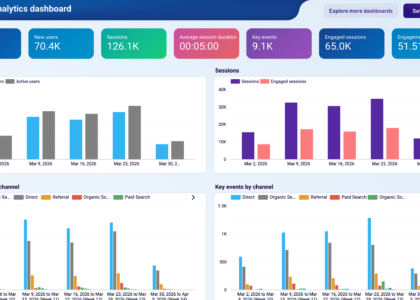
Data visualisation software plays a crucial role in aiding researchers to interpret data by transforming complex datasets into intuitive visual representations. By presenting information in the form of charts, graphs, and interactive dashboards, researchers can easily identify patterns, trends, and relationships within the data. Visualisations enhance understanding by providing a clear and concise overview of the information, allowing researchers to spot anomalies or outliers quickly. This visual approach not only simplifies the interpretation process but also enables researchers to communicate their findings effectively to a wider audience, facilitating data-driven decision-making and promoting greater insights from the research outcomes.
What is the future outlook for analytical tools in research?
The future outlook for analytical tools in research is promising, with advancements in technology driving innovation and efficiency. As researchers continue to grapple with increasingly complex data sets, the demand for sophisticated analytical tools that can handle large volumes of information and extract meaningful insights will only grow. Artificial intelligence (AI) and machine learning are expected to play a significant role in shaping the future of research tools, enabling automation, predictive analytics, and enhanced decision-making capabilities. With ongoing developments in data analysis techniques and software solutions, the future of analytical tools holds great potential for revolutionising the research landscape and accelerating discoveries across various fields.